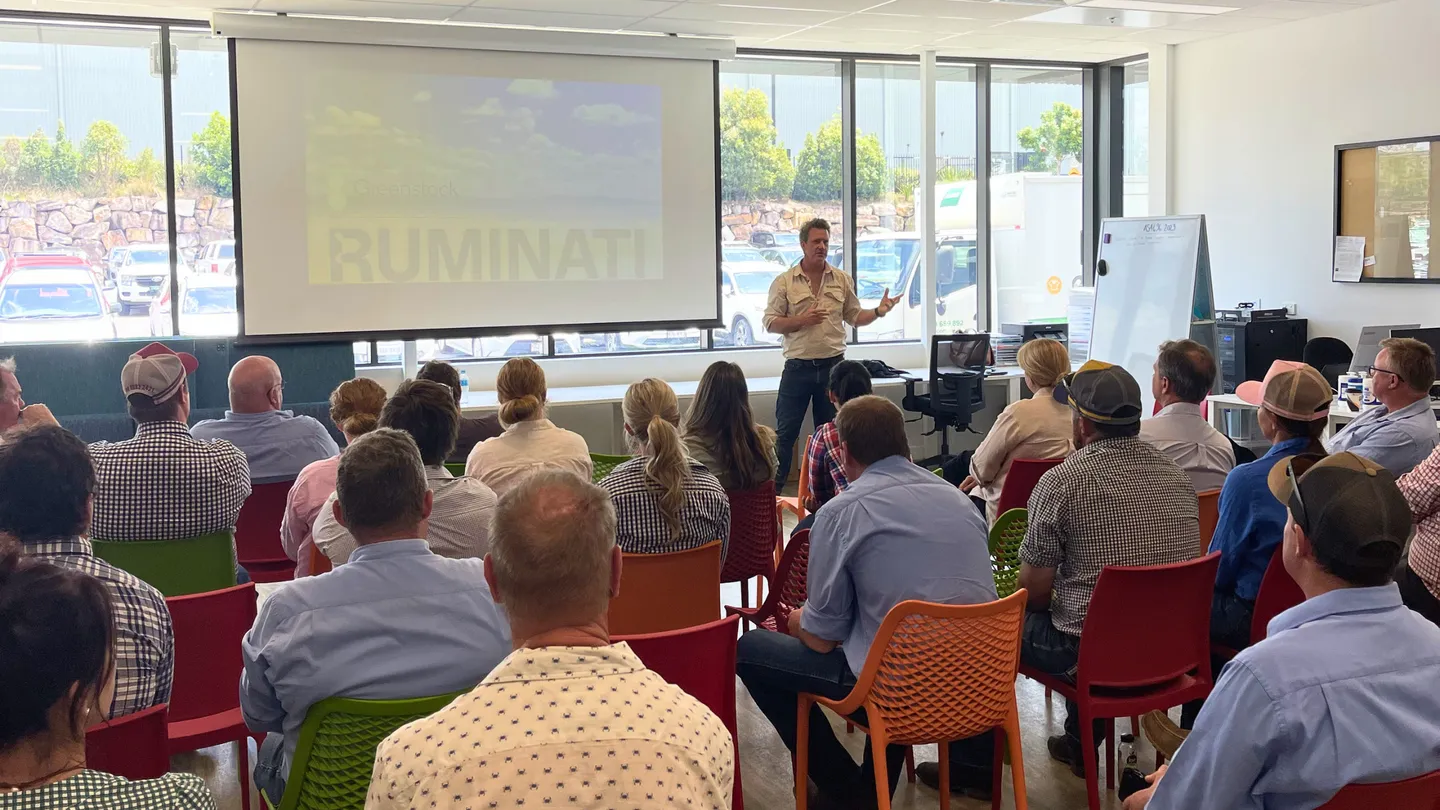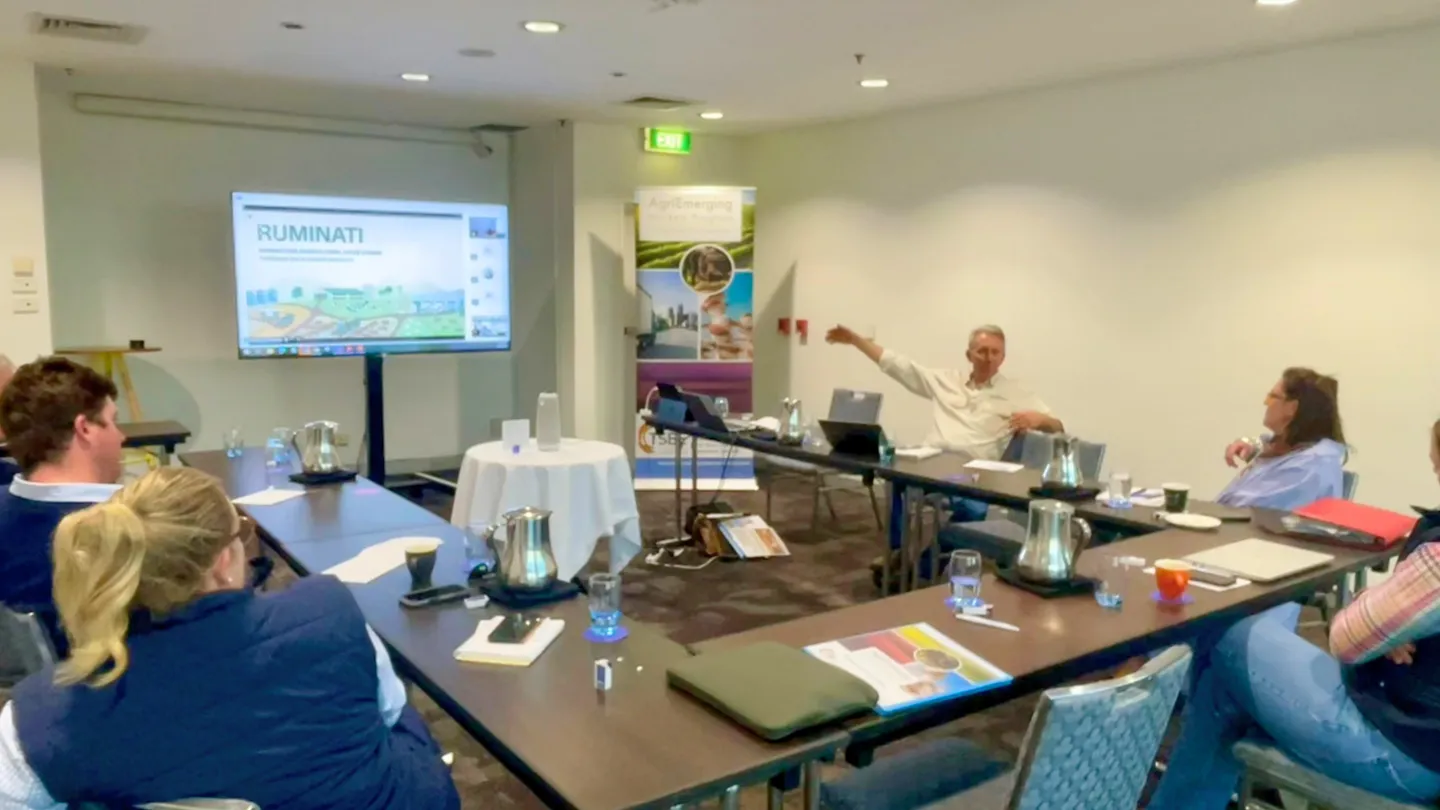
Most producers already carry a long list of jobs, and the questions about emissions now coming from buyers and banks add another to it, so the useful question is how to manage emissions tracking without it taking over the week. That was the backdrop to the Toowoomba and Surat Basin Enterprise (TSBE) AgriEmerging Markets Workshop in Sydney last month, the second event Ruminati has taken part in with TSBE.
Ruminati Customer Engagement Lead Bill Findlay spoke with producers there about Scope 3 emissions, which are the emissions a buyer counts from the farms it buys from, and about why the businesses further along the supply chain are increasingly asking for them. He also covered how tracking that data can help a farm run more efficiently and profitably as well as answer the buyer’s question.
Two things came through from the producers in the room all day. The first was a need for a straightforward platform to track and share emissions data without it becoming another job on the list, and the second was a growing demand for a tool that can handle integrated farm and feedlot operations in one system in place of several. Neither is a new observation, but hearing them again from producers who are already thinking seriously about the future of their businesses is a useful reminder for anyone building these tools, Ruminati included, of what matters in how the technology develops. If it doesn’t work on-farm, it won’t work at all.
That makes a fair test for any tool a producer is offered. The first question is how much time it adds on top of the records already kept for the business, and the second, for anyone running a farm and a feedlot together, is whether it treats them as the one business they are or leaves the producer to stitch two sets of figures together. Who sees the data and when should stay the producer’s call throughout.
The day also included contributions from Stephen Early at Trace SCI and Robert Mackenzie from Mackas Australian Black Angus Beef, along with Dorothy Dellosa from the Denmark Trade Council, who between them covered the broader picture of shifting consumer and environmental expectations in key export markets. That is the market end of the same question, because those expectations are what producers are being asked to keep pace with, and the answer the producers in the room gave was that keeping pace has to fit into the way the farm already runs.