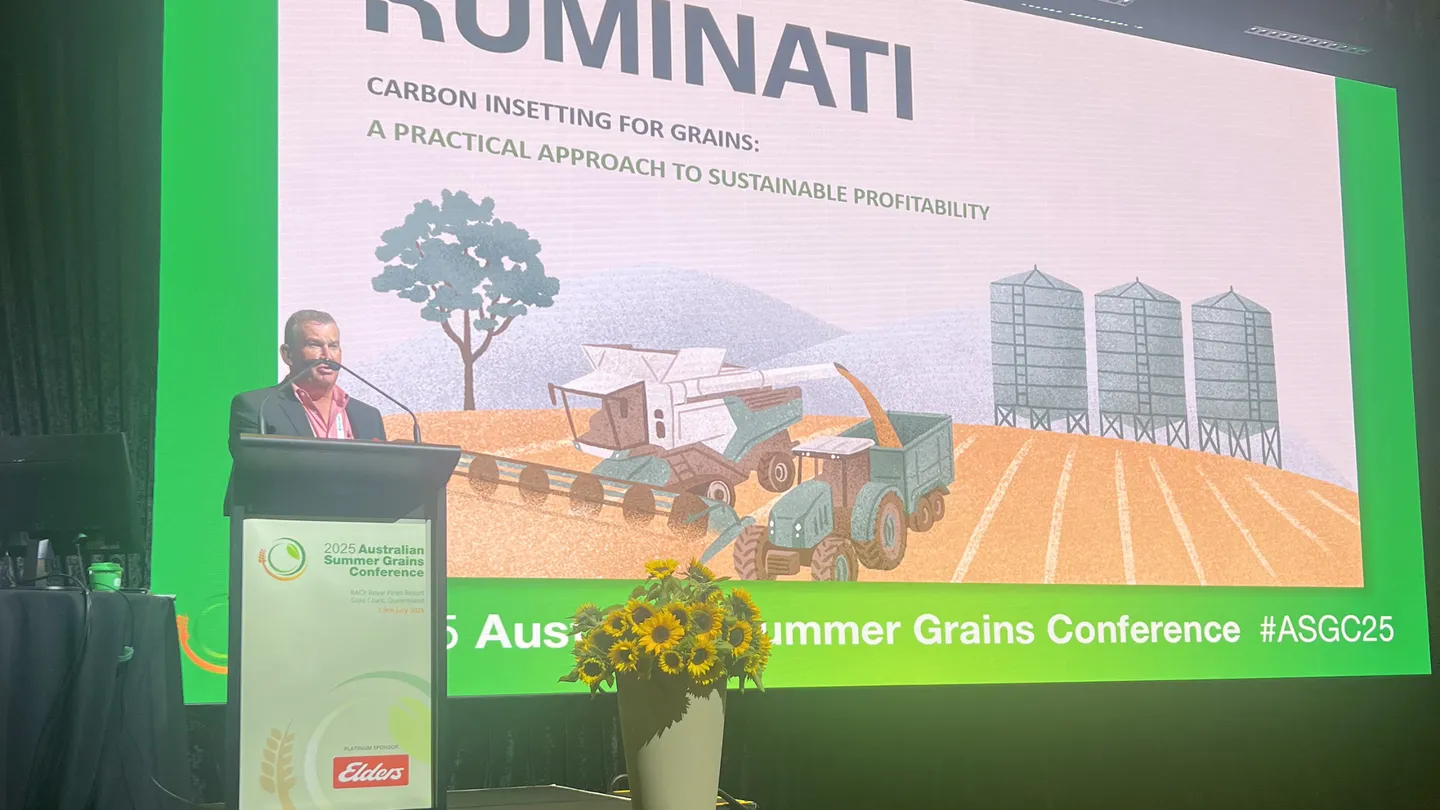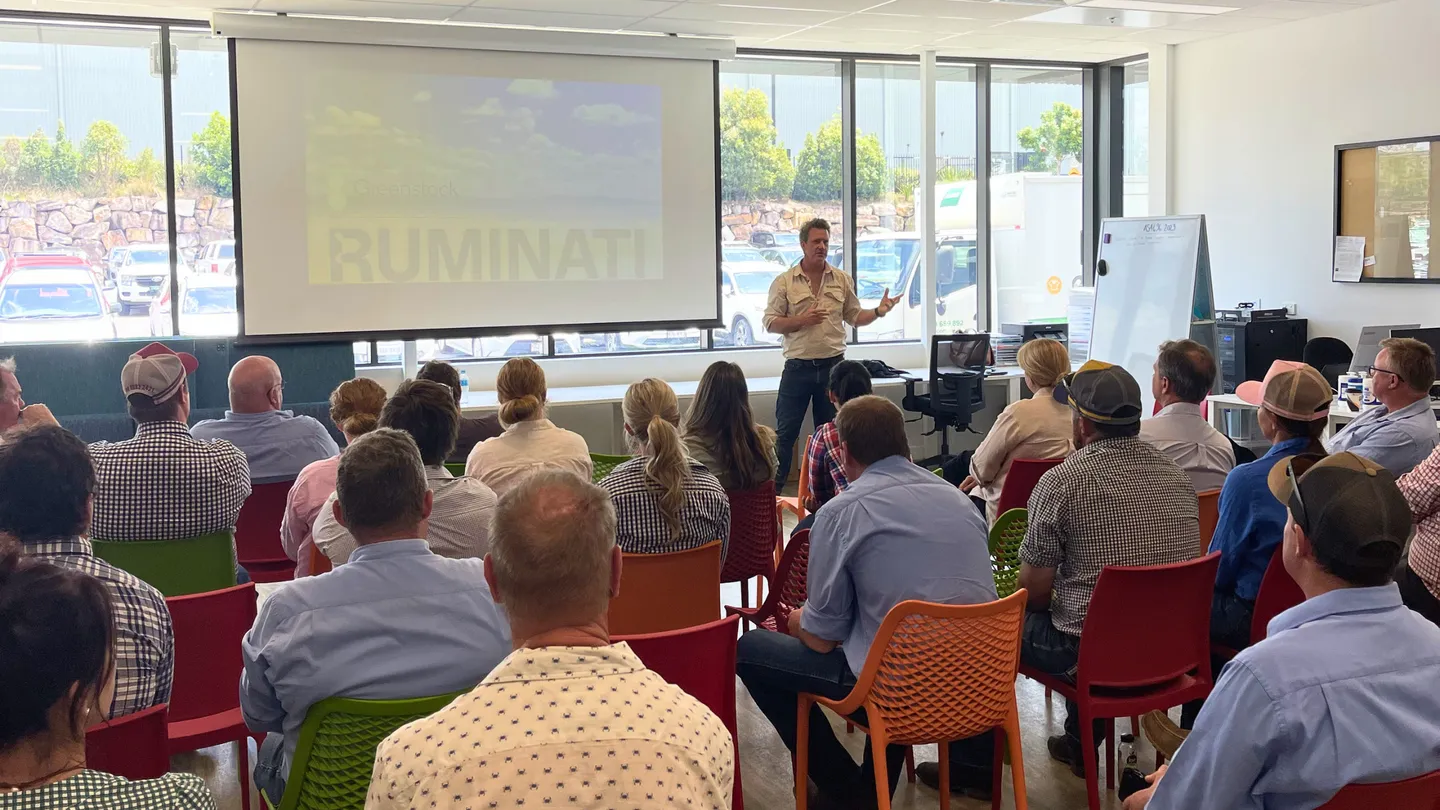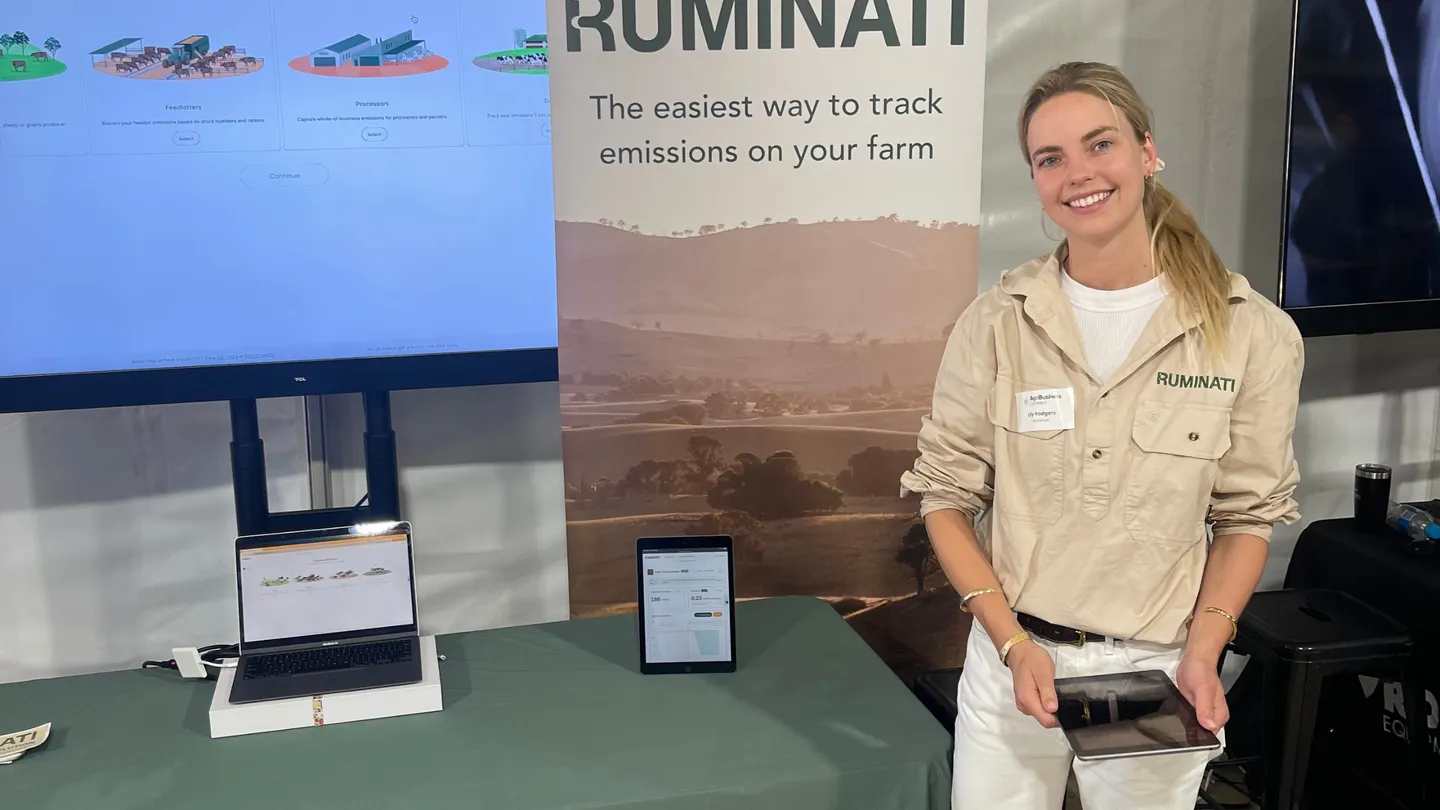
Most grain producers already keep a close eye on their paddocks, with input rates logged and yield maps stored alongside the soil tests, which means that when the conversation turns to emissions the starting point is usually less of a leap than it first sounds. That was the ground Lily Rodgers covered at the GRDC GroundUp Showcase Day at AgTech and Logistics in Toowoomba, where she spent the day representing Ruminati in conversations with grain producers about emissions tracking and the practical questions that come with it.
Those questions were mostly about what needs to be captured and how the platform works for a cropping system, along with what there is to gain from measuring emissions on farm beyond meeting a request from a bank or buyer. Fertiliser is one of the larger sources of emissions in a cropping system, so a producer who is already tracking application rates and inputs has a head start on a report that holds up when someone asks how it was put together, and grain producers are often further along on data capture than they get credit for.
The hands-on demos were a good way to work through all of this with producers directly. Seeing how the platform handles a cropping enterprise, from inputs and fertiliser rates to fuel and production figures, makes the process feel far more manageable than it does when it is described in the abstract. The questions that come out of a live demo are usually sharper than the ones that follow a presentation, which is a good reason to put the platform in front of people.
The same point kept coming up through the day, which is that taking action on emissions only generates value if the outcome is being measured. Improving management practices and reducing inputs, or moving to a more efficient system, cannot tell the story it needs to tell without data behind it, and for a grain producer much of that data is already being collected. What a report adds is a way to see what a change in management did to the figures, and to show that to a bank or buyer when they ask.