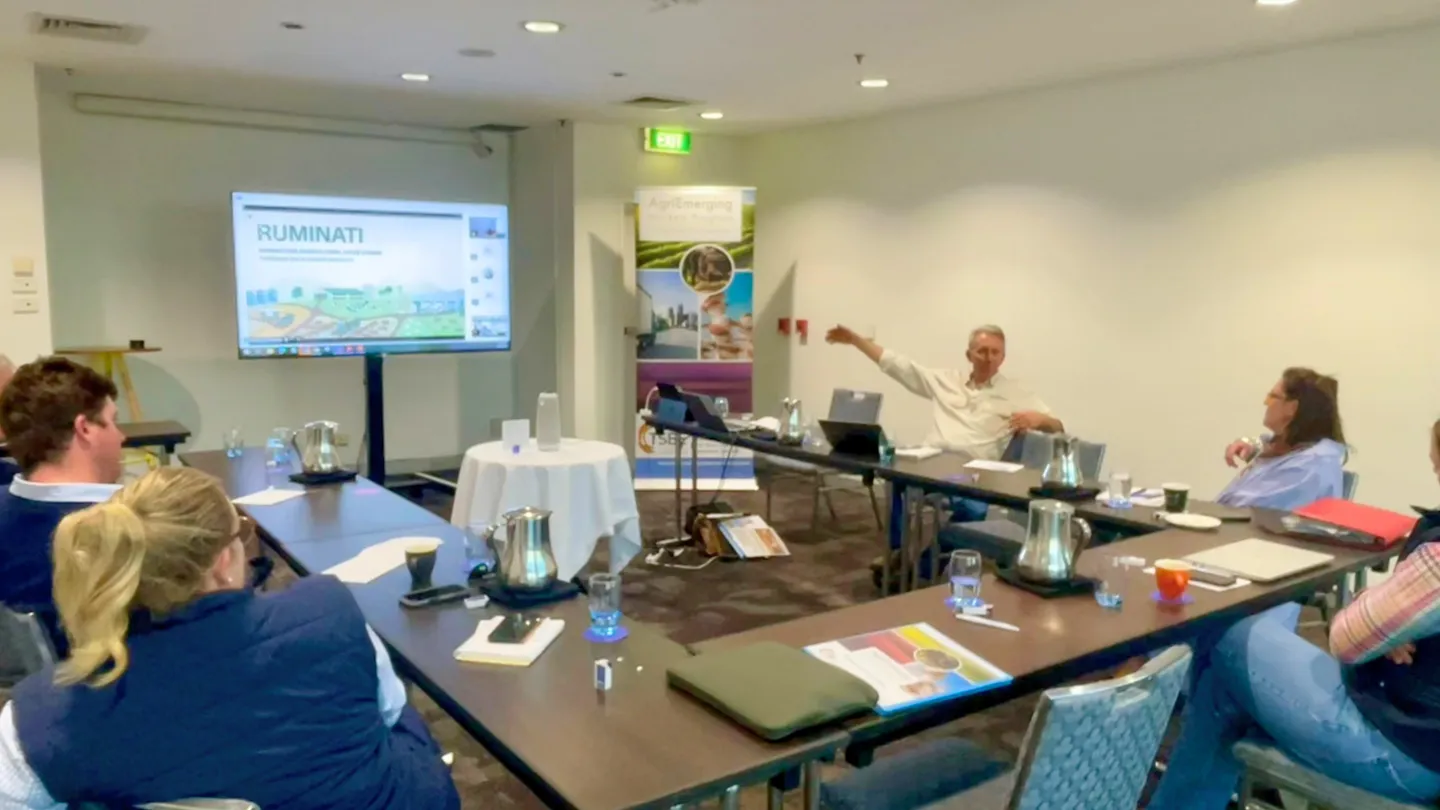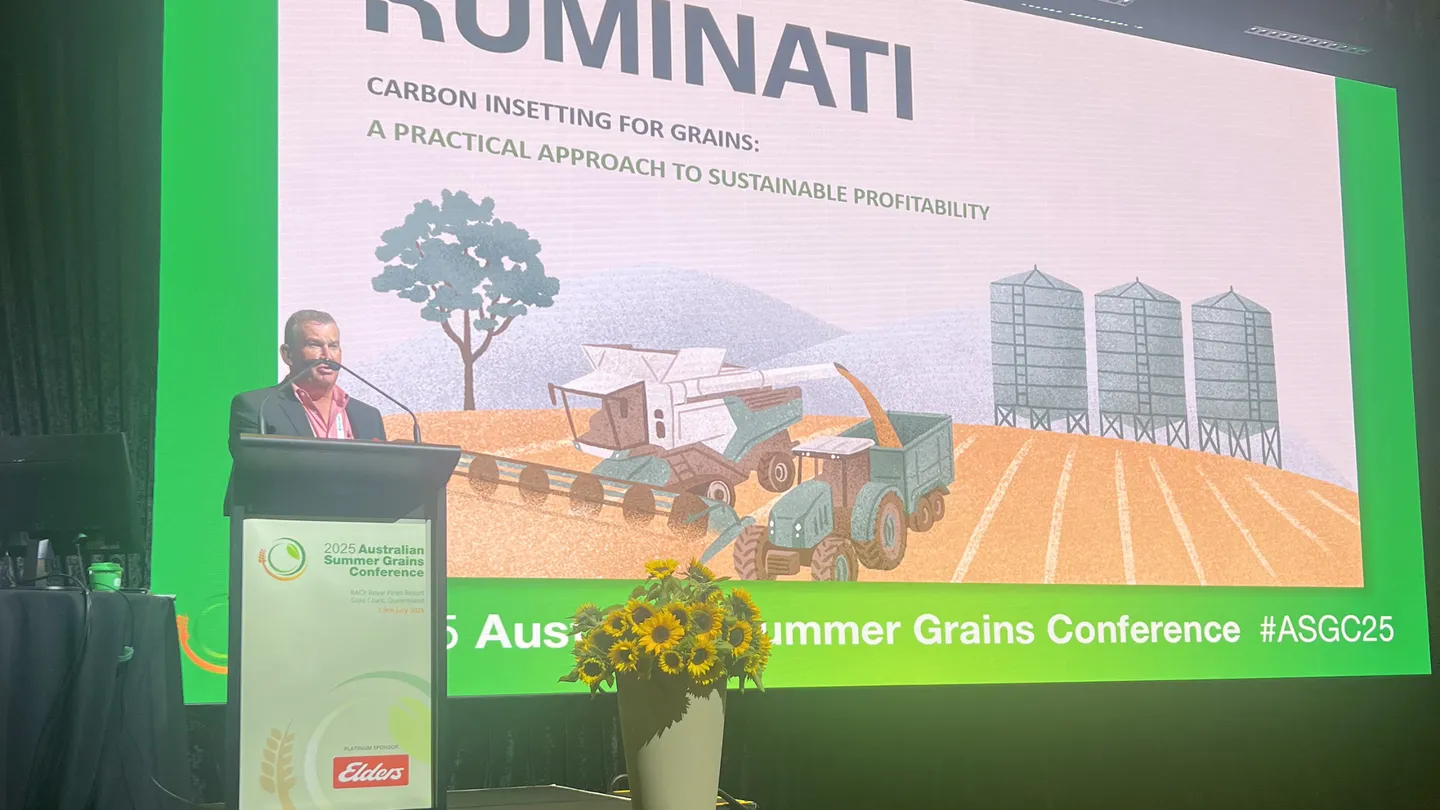
With input costs rising, grain growers have a sharp question for any new tool, which is whether it helps them run the farm more efficiently or just adds to the load. Andrew Whitelaw from Episode 3 put it that way from the floor at the Australian Summer Grains Conference on the Gold Coast, in the Carbon and Economics Stream sponsored by Rabobank Australia, and it is a fair test for much of what was discussed. The conference theme was about turning challenges into profitability that lasts, and the stream drew producers, advisors and innovators who were there for a conversation more than a run of presentations.
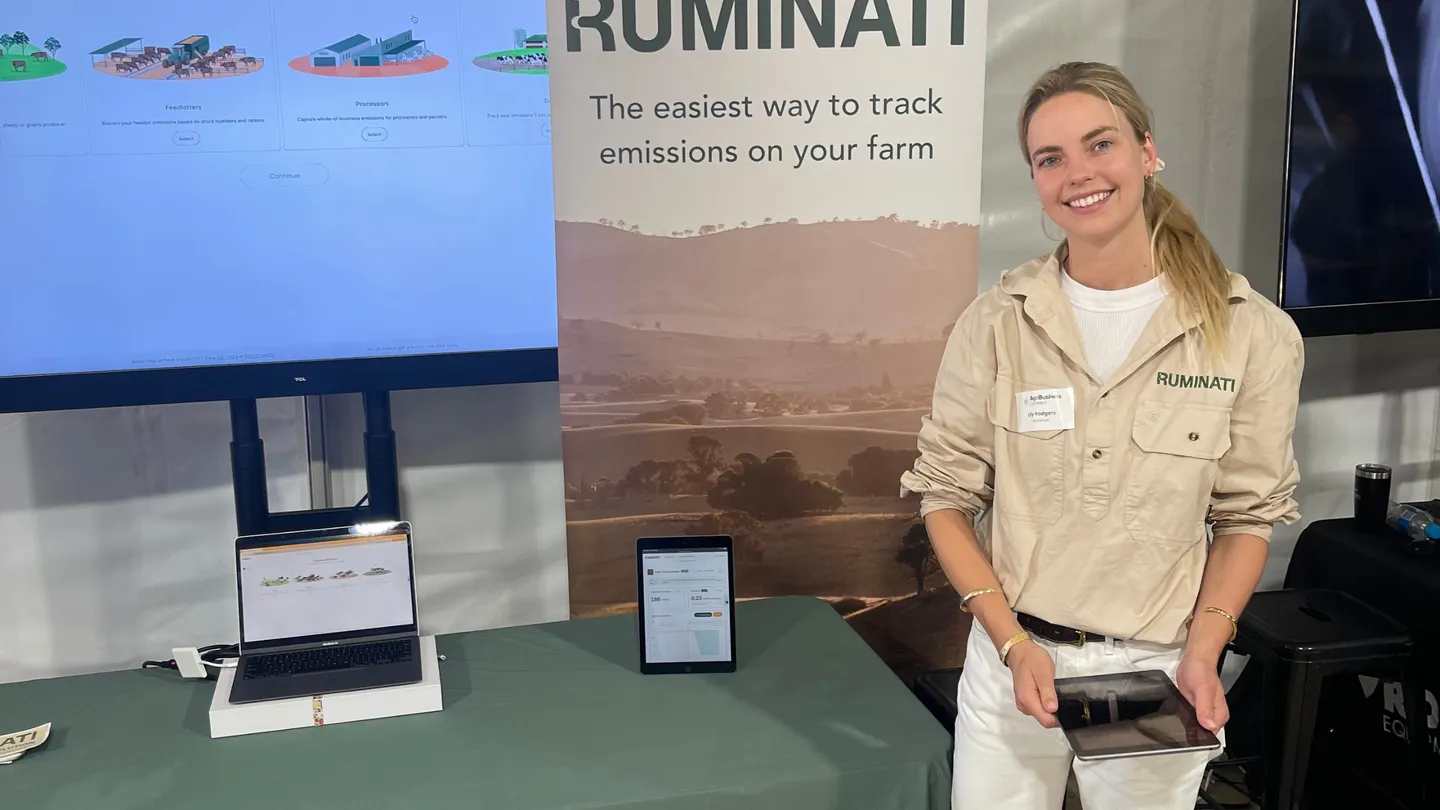
Ruminati COO Will Onus spoke in the stream on insetting for grains, and on what a practical approach looks like on the ground. Insetting means a buyer reducing the emissions in its own supply chain by working with the farms that supply it, and for grain the conversation has its own character, given the sector’s particular lens on inputs and margin at scale. Alex Greetham and Adam Little from Elders were there too, with Adam acting as MC for Will’s session.
The other point that stood out came from Rebecca Hurst at GrainGrowers, who said that data standardisation is a prerequisite for progress. Ruminati shares that view, and it applies to emissions tracking as much as to any other part of the supply chain. For a grower, standardised data means a figure that is read the same way by whoever asks for it, so the work done once does not have to be redone for each request.
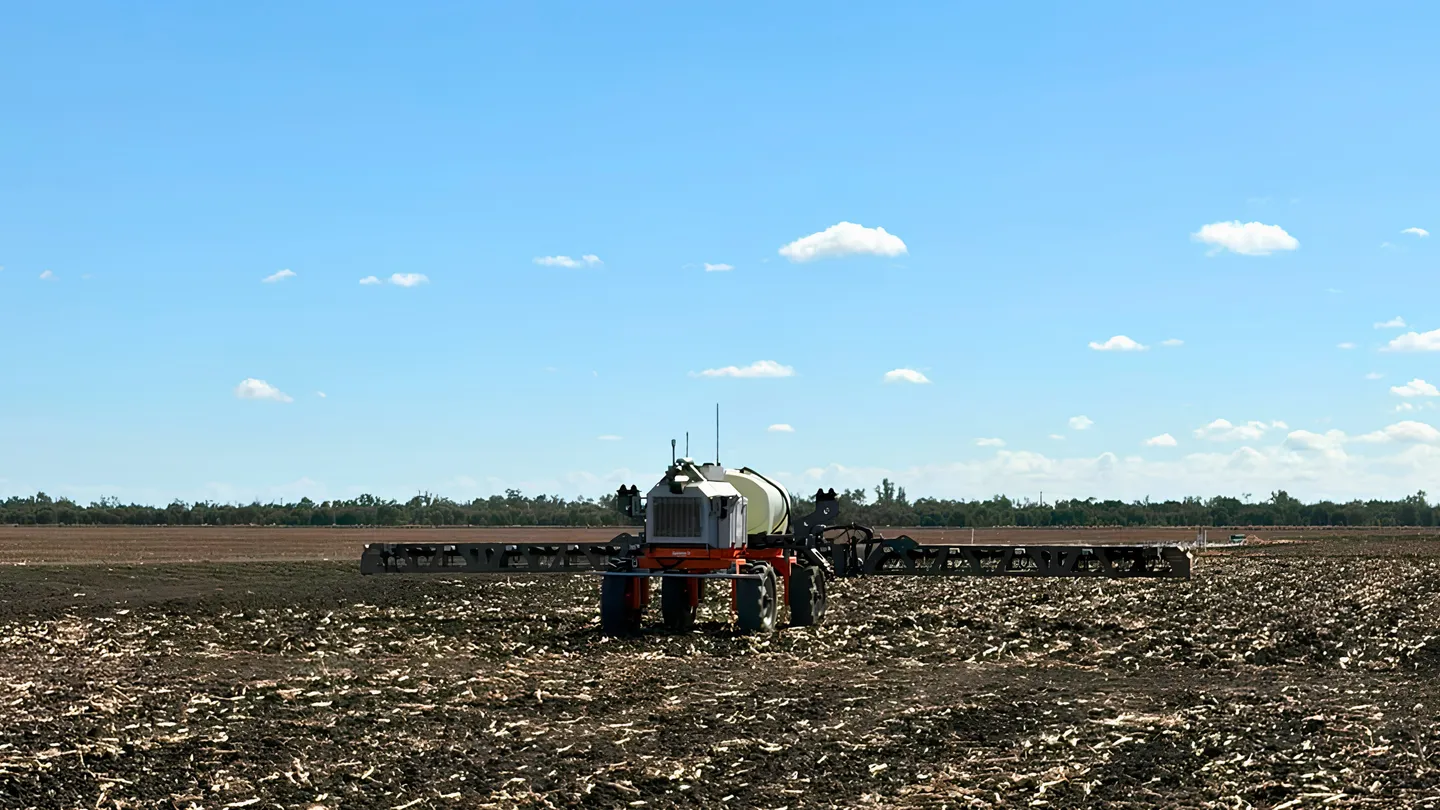
Put those two points together and they describe the same tension, between the growing demands placed on producers and how useful the tools available to them really are. For a cropping business, fertiliser and fuel are inputs growers already watch closely and sources of emissions, so measuring one goes a long way towards measuring the other, which is why efficiency is the right place for a tool to start. The grain sector is engaging with that seriously and without waiting to be told what to do, and the test it is applying is the one Andrew Whitelaw raised at the start: does a tool help manage efficiency, or does it add to the load.