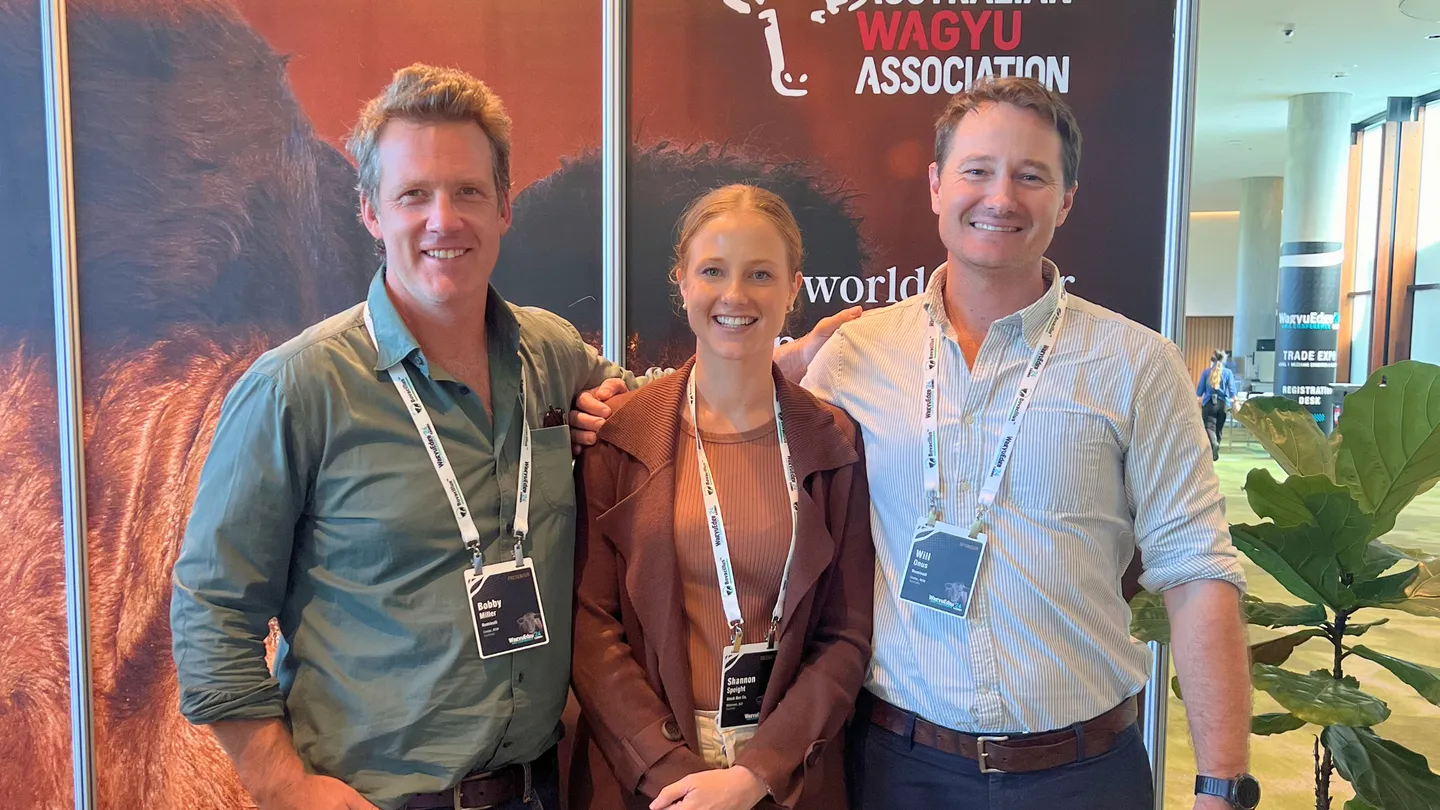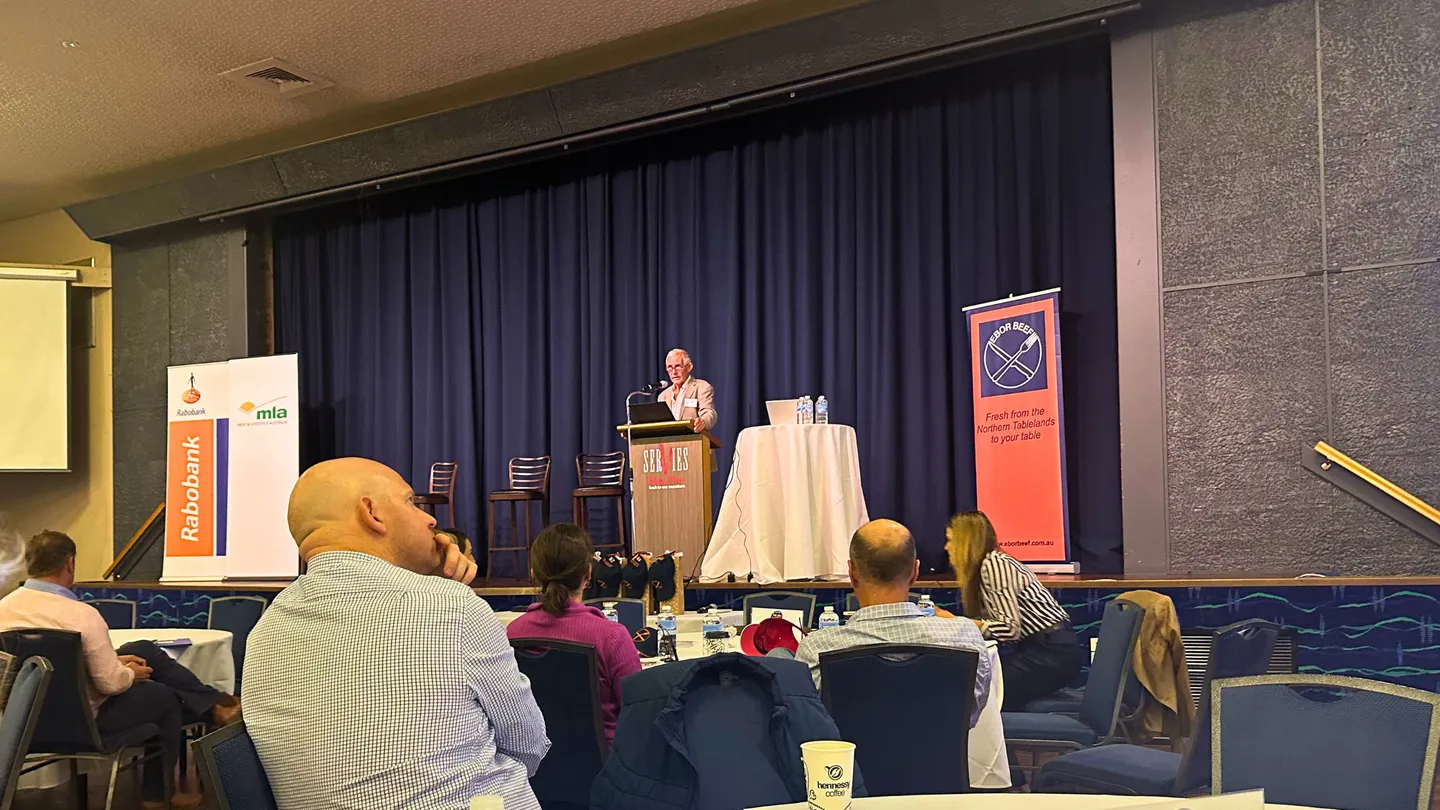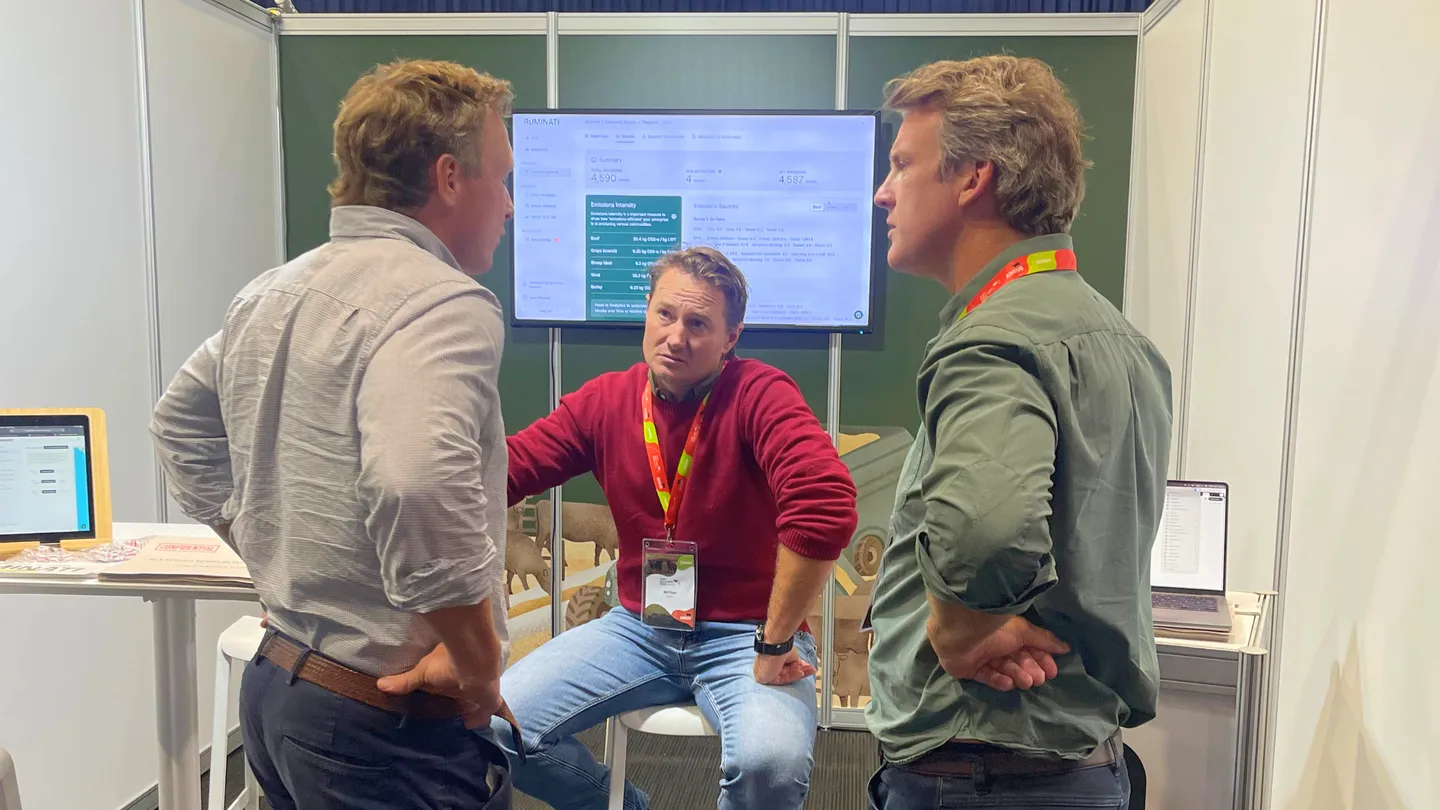
A breed that accounts for one in four of the cattle registered in Australia has a lot of say in where the industry’s efficiency goes next. That was the backdrop at the World Angus Forum in Brisbane, where producers, geneticists, researchers and industry people from 26 countries met under the theme Beef for a Better Planet. Ruminati CEO Bobby Miller, COO Will Onus and Lily Rodgers were there for all of it, catching up with familiar faces including Justin and Jess from Breedr and Peter from Rabobank and meeting plenty of new ones.
Sinclair Munro opened by describing Angus Australia as a family of small business farmers, 4,000 members strong. That set the tone for the rest of the forum, because the decisions being discussed on stage, from genetics to how emissions are managed, are made by farm businesses with their own costs and margins to think about. Dr Jeannette Young’s point that one in four cattle registered in Australia are Angus is what gives those individual decisions their reach.
The line that stayed with us came from Michael Crowley at MLA: “The more efficient we are as an industry, the better our emissions intensity per kilogram of product.” Emissions intensity is a read on how efficiently a business is running, so a breeder selecting for efficiency and a commercial producer looking at the intensity figure on their emissions report are looking at the same thing from two ends, and the intensity figure is where the breeder’s work shows up.
Prof Frank Mitloehner’s session on livestock and climate gave that some grounding. It was a rigorous, science-based look at methane and what managing it well requires, delivered without the usual noise that surrounds the topic, and it matters to producers because for most livestock businesses methane from the animals is the largest part of the Scope 1 figure.
The question that follows from all of this is how quickly the efficiency gains breeders are working towards will show up in the emissions figures of a commercial herd. The only way a producer will see that is with a few years of their own records to look back on.