Back to the Ruminati Journal
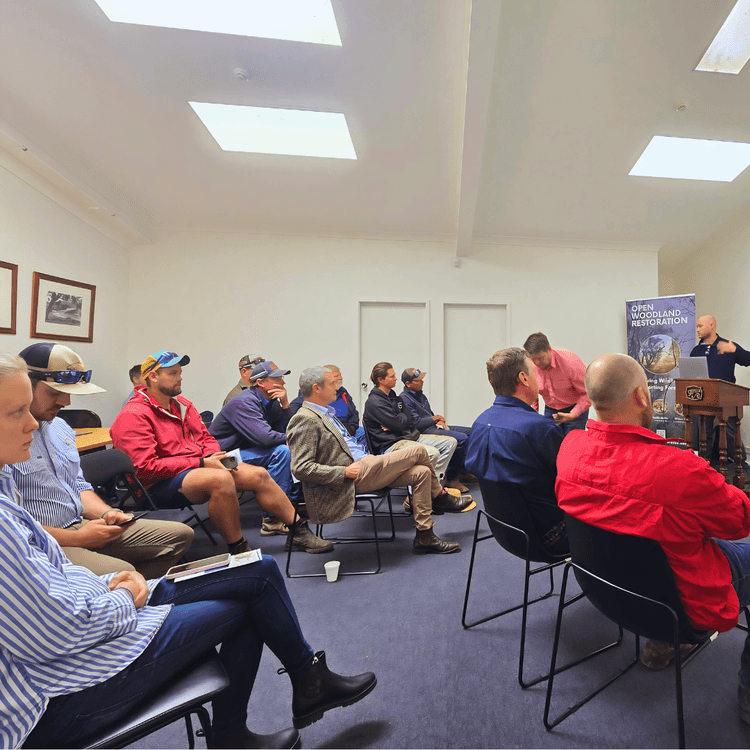
A day in Goulburn, a room full of beef and wool producers, and the question nobody's fully answered yet.
Written by Ruminati Team on May 6, 2026
Will Onus was out in Goulburn last week for an Elders producer day: short presentations, lunch, and a Q&A with a room full of beef and wool producers that turned out to be worth the drive.
A couple of the sessions were genuinely interesting. Phil Tickle from Cibo Labs presented on pasture feedbase management in a way Will hadn't seen framed quite like that before: regional pasture biomass data that gives producers forward visibility on where supply and demand pressure is likely to build across a region. For anyone running cattle in northern NSW right now, that kind of early read on pasture availability is the difference between reacting to a market and being able to anticipate it. Useful stuff.
The Regen Farmers Mutual session with Andrew Ward was also worth the afternoon. What landed wasn't the concept of carbon projects (most producers in the room had heard that pitch before) but a practical worked example of how tree planting can be spaced and integrated into a productive grazing system, grazing and planting on the same country at the same time. That reframes the conversation from "set aside" to "add on," which is a meaningfully different proposition for a producer trying to keep their operation running productively.
But the question that probably summed up where producers are at came from the floor, directed at Will: "Do we actually get paid more for our product if we've lowered our emissions intensity?"
It's the right question. And it's honest about where the gap still sits between what the supply chain is asking for and what's landing back with producers as tangible value. The answer is: not consistently (not yet), but the producers who have the data when that changes will be in a very different position to those who don't. The commercial incentive is coming. The producers who've already built a credible record won't be starting from scratch when it arrives.
That's what events like this are actually for. Not just the presentations, but getting that question asked out loud, in a room where the people who need to hear it are sitting.
Thanks to Joe Siebert and the Elders Goulburn team for putting it together, and to Cibo Labs, The Woolmark Company and Regen Farmers Mutual for making the trip.
If you're a producer thinking about building your own emissions baseline, Ruminati PRIME is free to get started, and the process is simpler than most people expect!