Back to the Ruminati Journal
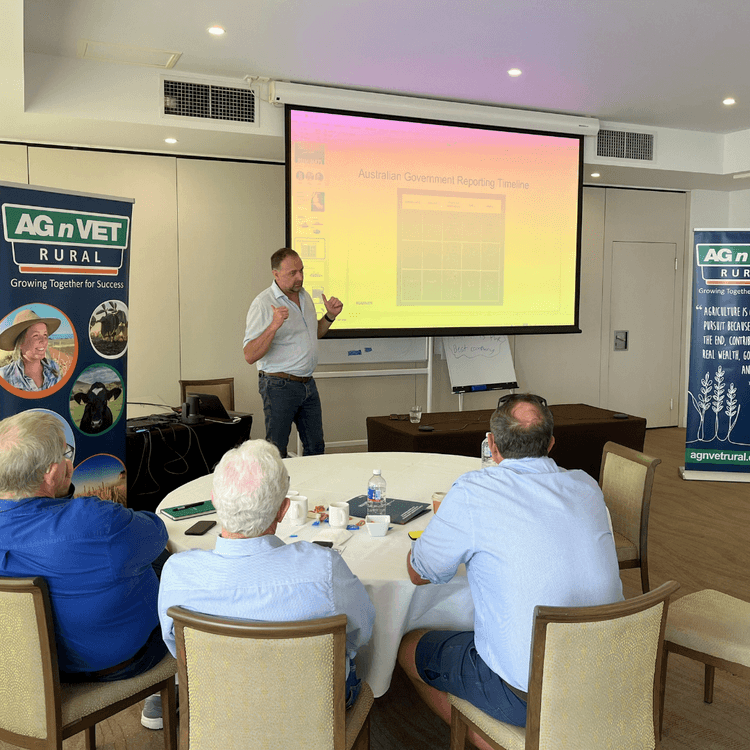
Emissions reporting in St George: a room that wanted practical answers
Written by Ruminati Team on February 9, 2024
St George in February is warm. The AGnVET Rural Conference last week was warmer still- in the best sense.
Peter Leihn presented to a room of producers and advisors on emissions reporting: what it actually involves, what the platform does, and where the industry and government settings are heading. The format was hands-on: a live demonstration of Ruminati's emissions reporting workflow, walking through how a producer builds a report, models different reduction scenarios, and shares aggregated data securely with supply chain partners.
That last piece (secure, controlled data sharing) tends to generate the most questions in rooms like this. Producers in mixed farming regions like St George are often supplying into multiple markets simultaneously, each with their own reporting expectations and data requests. The idea that emissions data can be captured once, in a standardised format, and then shared selectively with the relevant parties (rather than filling out a different form for every buyer, bank or processor) is one that tends to be well received.
Peter also covered the current state of play in emissions reporting policy: where mandatory reporting requirements sit for large businesses, what the trajectory looks like for farm-level reporting, and what the forthcoming federal standard is likely to mean in practice. The direction is clear even if some of the detail is still being worked through, and producers who understand the landscape are better placed to make decisions about when and how to engage.
A big thank you to Scott Haynes and the AGnVET Rural St George team for bringing together a genuinely engaged group of producers and for creating the kind of setting where these conversations can happen properly.