Back to the Ruminati Journal
Four reasons producers are starting to take emissions tracking seriously
Written by Ruminati Team on October 3, 2023
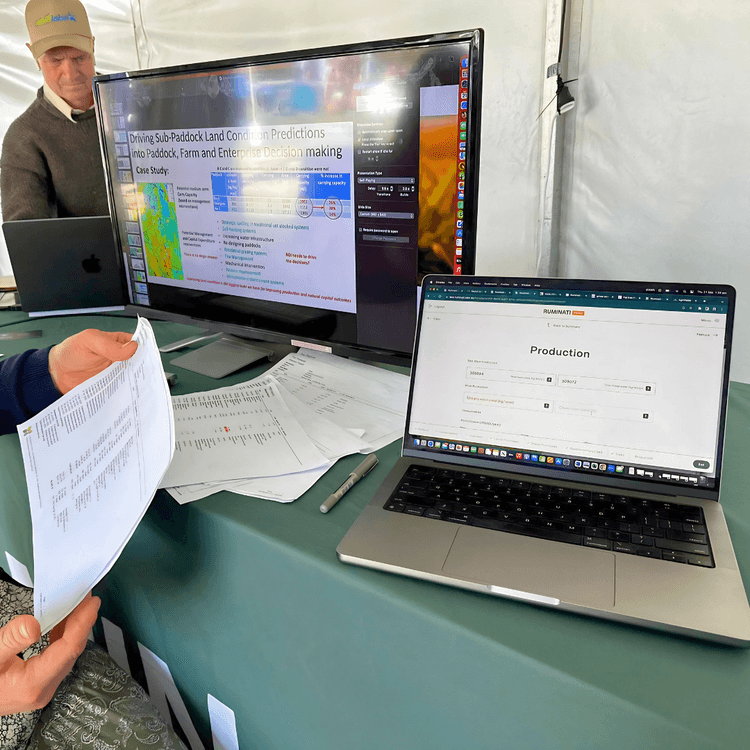
Bobby Miller was at the Henty Machinery Field Days last month, hosted in AgriWebb's tent, and the conversations with producers covered ground that would have felt quite different even two or three years ago. Emissions tracking is no longer a topic that gets a polite nod and a subject change, producers are asking specific questions, and the reasons they're engaging have become more varied and more commercially grounded.
Four themes kept coming up across the day:
The first was resource efficiency. Tracking emissions requires a producer to look carefully at inputs (fuel, fertiliser, supplements, electricity) and that process reliably turns up inefficiencies that weren't obvious before. Producers who've gone through it often find that the emissions number is almost secondary to what they learn about their own operation in building it.
The second was market access. International markets, particularly in Europe and parts of Asia, are moving toward emissions disclosure requirements for imported agricultural products. Australian producers who have their baseline in place are better positioned to meet those requirements when they arrive- and they are arriving.
The third was environmental stewardship. Most producers don't need to be told that land management matters. What emissions tracking offers is a way to make that stewardship legible: to put numbers around practices that have always been part of good farming, and to communicate them clearly to the buyers, banks and insurers starting to ask for that kind of evidence.
The fourth was climate adaptation. Understanding a farm's emissions profile is also a way of understanding its exposure to climate-related risk: where the big inputs are, where the vulnerabilities sit, and where investment in efficiency might also build resilience.
The conversations at Henty were a useful reminder that producers engage with this topic on their own terms and for their own reasons, and that the business case is increasingly strong enough to speak for itself.