Back to the Ruminati Journal
Scope 3, supply chains and what the new reporting laws mean for farmers
Written by Ruminati Team on December 3, 2024
Scope 3 emissions are the part of the reporting picture that keeps supply chain managers up at night, and for good reason. For any large food and agriculture business, the vast majority of emissions sit outside their own operations, embedded in the farms, feedlots and processors that make up their supply chain. Under Australia's new mandatory climate reporting laws, that's no longer something big corporates can note and move on from.
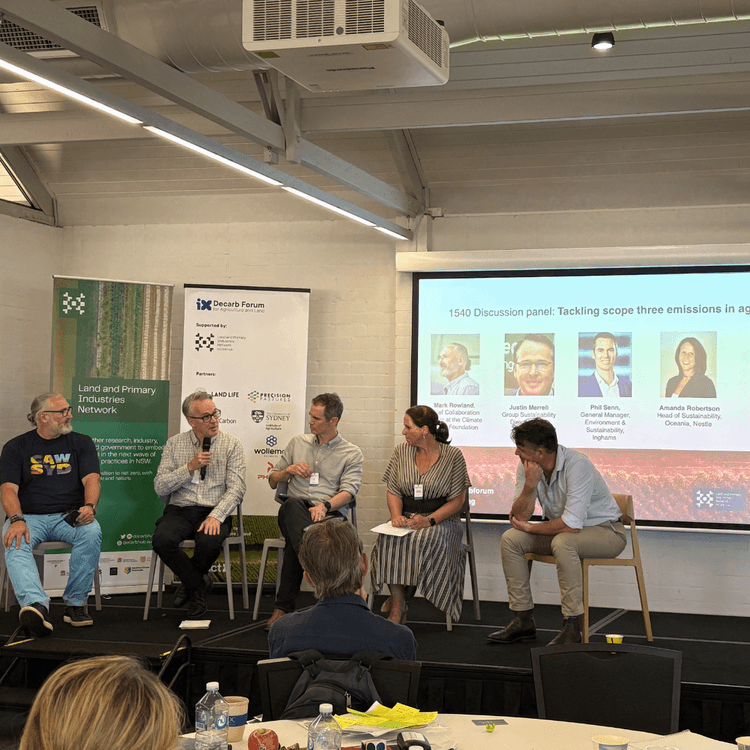
Bobby Miller and Bill Findlay joined industry leaders at the Impact X Decarb Forum in Sydney last week for a day of roundtable discussions and panel sessions on exactly this challenge. The standout conversation was a panel moderated by Mark Rowland from the Climate Action Foundation, with Justin Merrell from Lion, Phil Senn from Inghams, Amanda Robertson from Nestlé, and Aaron Simmons from NSW DPIRD working through how major corporates are managing emissions reporting in practice, and what that means for the diverse production systems sitting behind their products.
What came through clearly was that the industry is further along than the headlines often suggest. Corporates are moving, supply chains are engaging, and producers who have started building their emissions baseline are already in a better position than those waiting to see how it all unfolds. The complexity of agricultural systems is real and acknowledged, but it's not being used as a reason to stand still.
For Ruminati, days like this are a useful reminder of why the work matters. The data flowing off farms is increasingly central to how large businesses meet their reporting obligations. Getting that data captured accurately, consistently and in a format that actually travels up the supply chain is the challenge the industry is working through, and one worth being part of.