Back to the Ruminati Journal
What the Wagyu marble score story tells us about the future of emissions tracking
Written by Ruminati Team on April 22, 2026
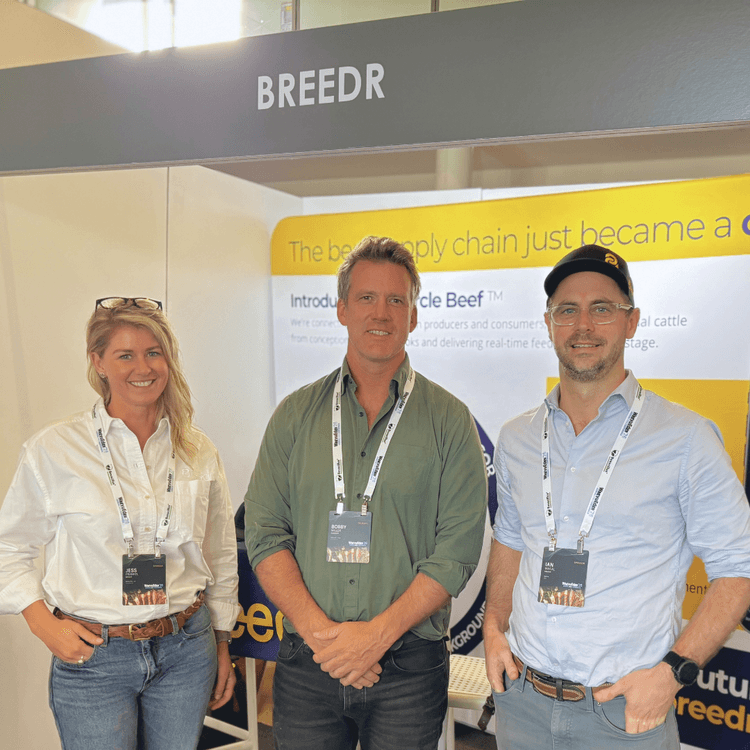
Bobby Miller was at WagyuEdge 2026 in Brisbane last week, as a Wagyu producer and AWA member as much as anything else. It's worth separating those hats sometimes, and this was one of those occasions where the producer perspective was the more interesting one to bring.
The mood at the event was genuinely positive. Global demand for Wagyu is holding, the herd has upgraded significantly, and Australia now produces 80% of marble score six and above- a remarkable shift from four years ago, when that same proportion sat between MS3 and MS6.
That improvement didn't happen by accident. It happened because the industry decided something mattered, invested in the data infrastructure to track it, and kept going. There are now 690,000 animals on the genomic database, and Wagyu Breeding Values are replacing EBVs this year. Consistent measurement over time, a shared framework, and the discipline to keep building on it before the full benefits were visible. When an industry puts sustained attention into measuring something, the numbers move. The marble score story is one of the cleaner examples of that in Australian agriculture.
That principle doesn't stop at genetics.
The sustainability and emissions conversation in agriculture is building steadily- less loudly than it was a couple of years ago in some rooms, but the underlying drivers haven't changed. Supply chains are still under pressure to report. Banks are still asking questions. Export markets are still moving in the same direction. The same discipline that drove the marble score improvement (measure it consistently, build the habit before you see the benefits) is exactly what will put producers and supply chain businesses in a stronger position as that pressure arrives.
The Wagyu industry knows better than most what focused, sustained data investment can produce over time. That track record is worth something as the next set of questions starts to come into focus.
If you're a producer thinking about where to start with emissions tracking, Ruminati PRIME is free to get started (and it only takes 30 minutes- the process is simpler than most people expect!)