Back to the Ruminati Journal
Who actually bears the cost when a sustainability claim gets made?
Written by Ruminati Team on May 29, 2026
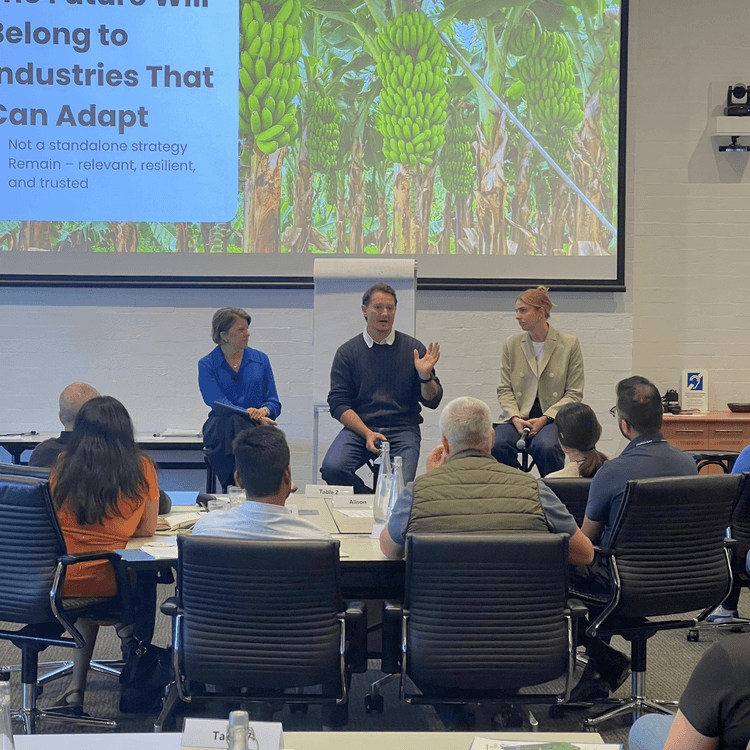
The IFPA Produce Exec Program in Geelong last week wasn't an emissions event. It was a produce and horticulture program, with a room full of people thinking about the future of their businesses and their supply chains. But one question kept coming up anyway, in different forms across different sessions: when a sustainability claim gets made, who's actually carrying the cost of it?
It didn't always land as a direct question. More often it was underneath something else: a comment about investment, a point about market access, a observation about what's being asked of producers versus what's flowing back to them. But it was there consistently enough to be worth noting.
Jenna Lindbeck from Roc Partners put the investment version of it well: the businesses worth backing are the ones where sustainability isn't a separate function, it's just how the business runs. When the things that reduce your footprint also improve your margins, the return stops being something you have to argue for. Belinda Wilson made a related point about horticulture specifically: Australian producers are already doing serious work, and a lot of the gap is simply about building the systems that let them show it.
That gap is the thing. There's a cost that doesn't appear on any balance sheet — the indirect market access burden that settles quietly on producers when claims are being made further up the chain by businesses that don't yet have the data to back them up properly. It's real, and the supply chain is starting to work out that it can't stay there indefinitely.
For us, that's exactly the problem Ruminati is built around: not adding to the reporting load, but making the work producers are already doing legible to the businesses that need to see it. If that's a conversation worth having, we're at hello@ruminati.com.au.