Back to the Ruminati Journal
Who owns the story? On-farm emissions data and the producer's perspective
Written by Ruminati Team on March 19, 2024
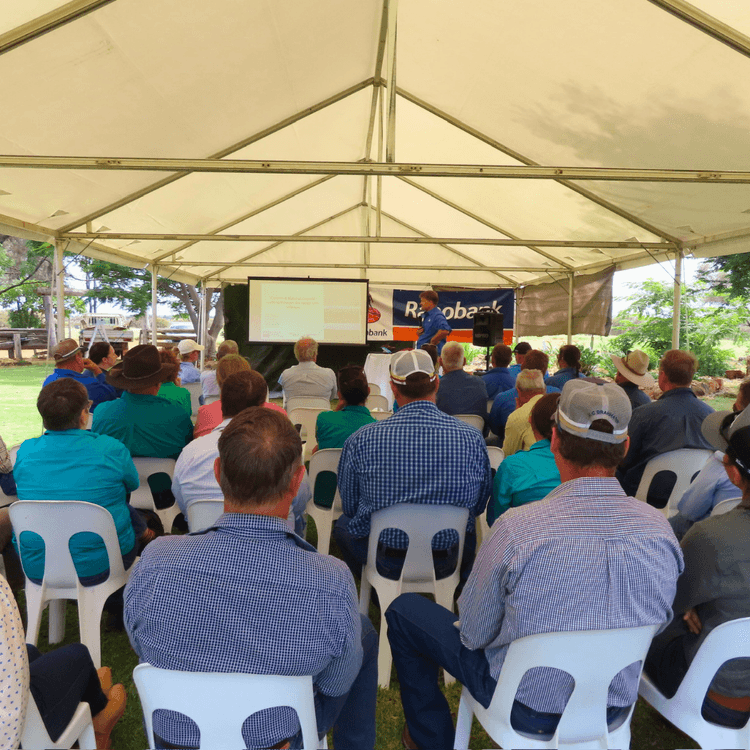
Field days in central Queensland tend to attract producers who are genuinely curious rather than just ticking a box, and the QUT Real World and Rabobank field day in Rolleston last week was no exception. The conversation centred on carbon and natural capital- two topics that are increasingly difficult to separate when you're talking about the long-term productivity and value of a grazing property.
Will Onus presented on the Ruminati platform and the role it plays in helping producers get across their own emissions data: how it was developed from a producer's perspective, what it captures, and why the data matters beyond the immediate pressure of supply chain or financial reporting requirements.
One thread that ran through the discussion was the idea of producers owning their own climate narrative. There's a tendency in the broader policy and industry conversation to frame emissions reporting as something that happens to farmers: a requirement imposed from outside, with the data flowing outward to processors, banks or government. The more useful framing, and the one that tends to resonate in rooms like Rolleston, is that a producer who understands their own emissions profile is better placed in every conversation they have with the supply chain. The data belongs to them. How they use it, and who they share it with, is their decision.
Natural capital sits alongside this in an important way. The emissions number tells part of the story of a farming business, but the landscape, the vegetation, the waterways and the management practices that shape all of it tell the rest. Getting both into a format that's useful and legible to the people who need to see it is where a lot of the work in this space is focused right now.
Thanks to the Rabobank and QUT teams for a well-run and genuinely useful day.