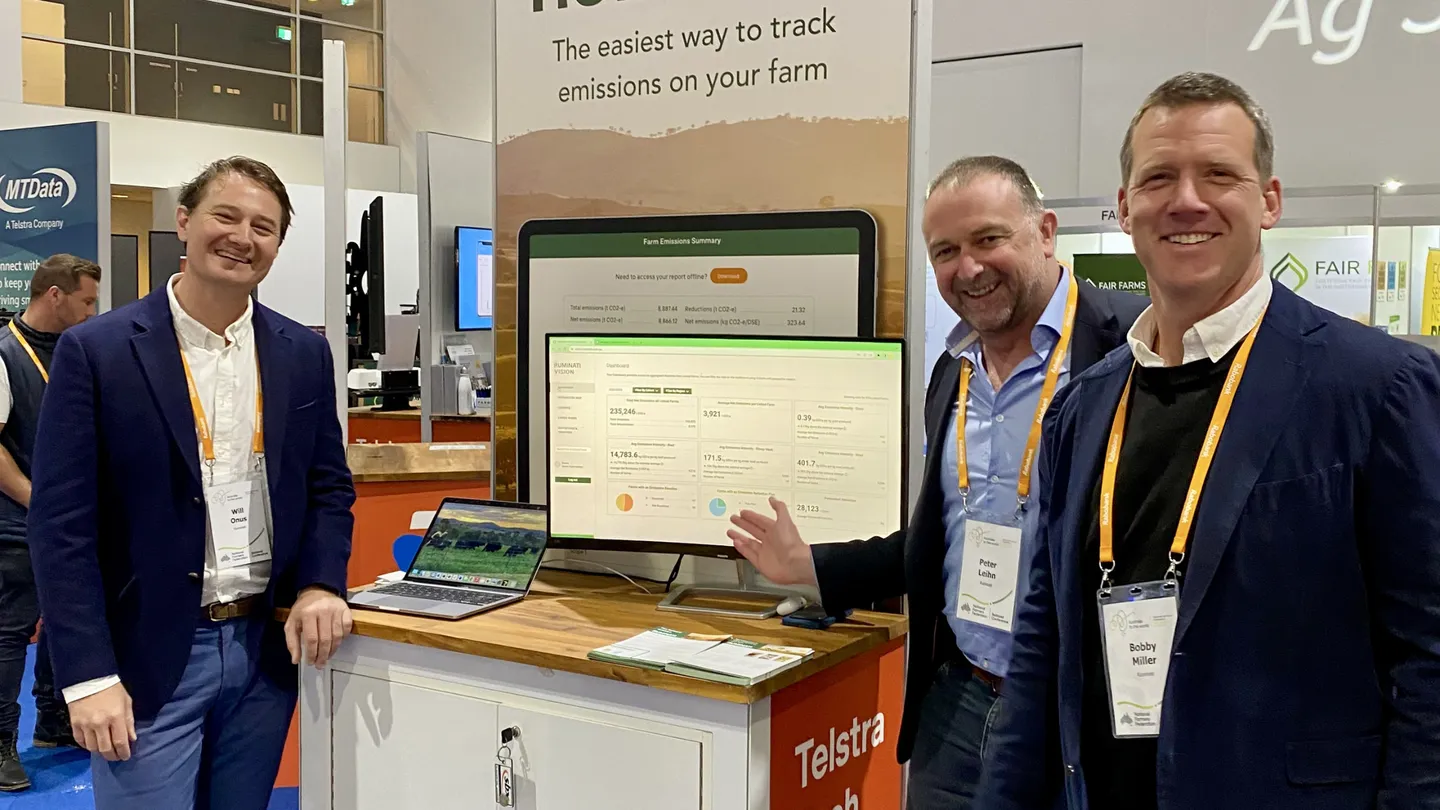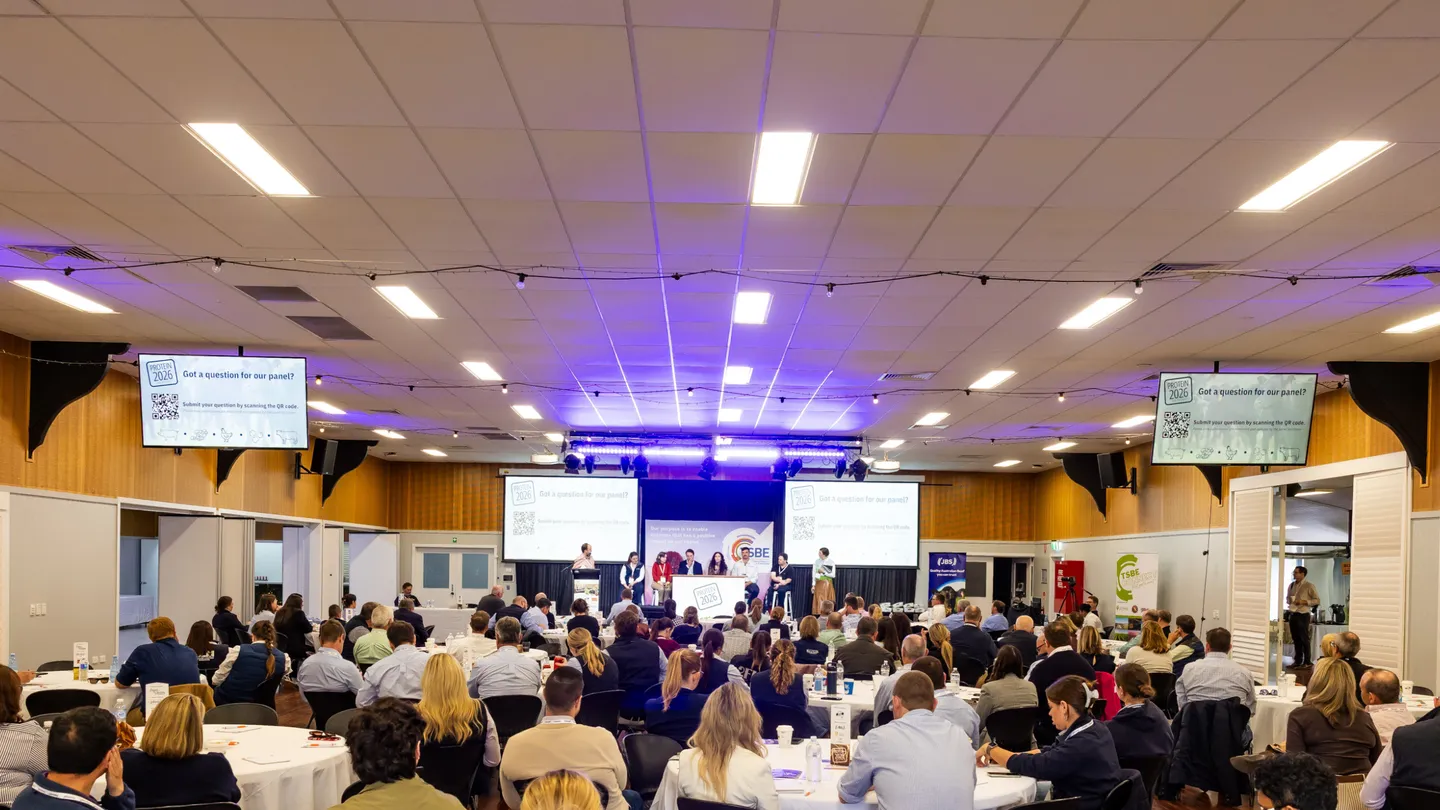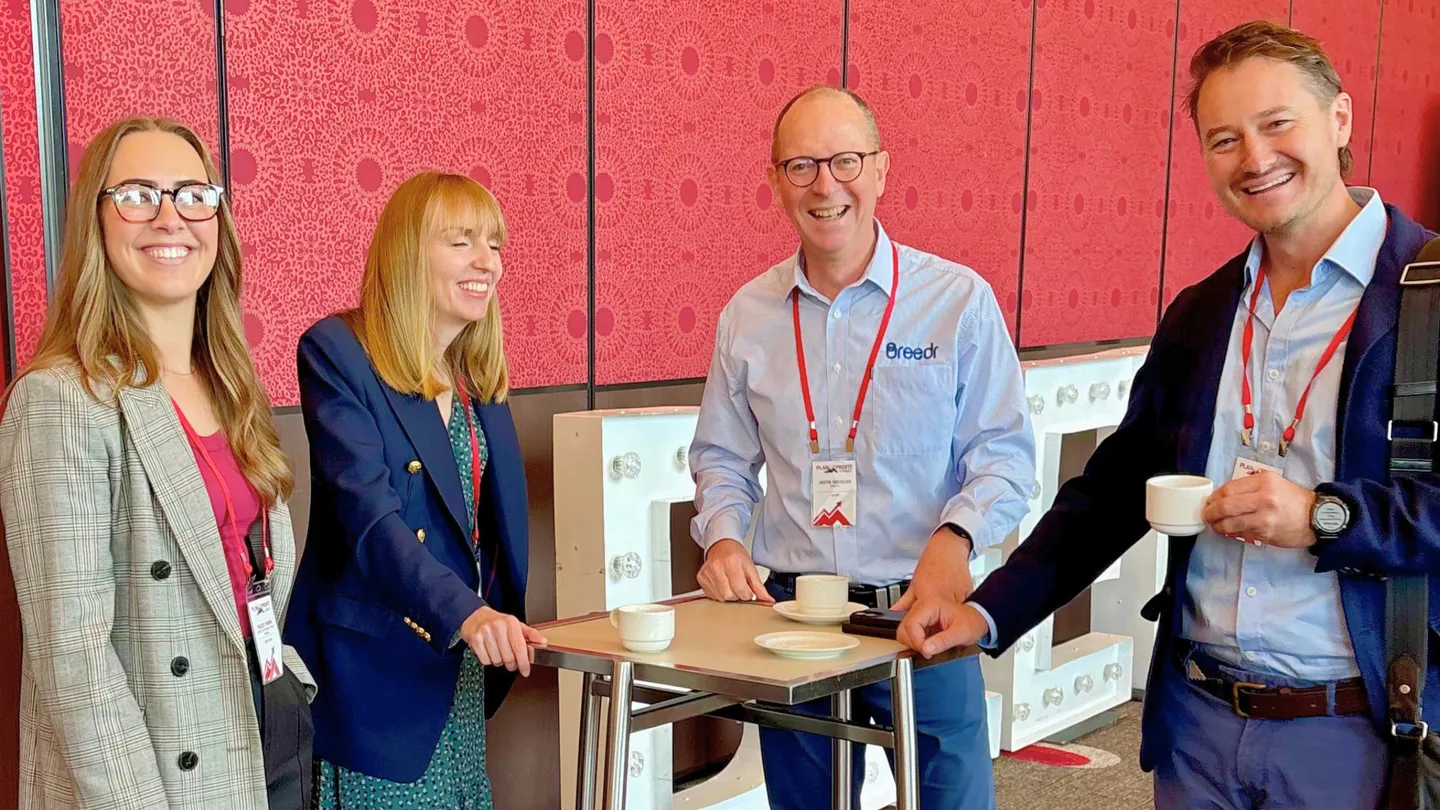
When a large business asks a producer for emissions data, the request should come with an explanation of why it is needed and how it will be used, and with an answer to what the producer gets out of sharing it. Tim Hardman from FMG Global made that point at the Semex Plan to Profit Summit in Melbourne, and it set the direction for the day. Ruminati CEO Bobby Miller, COO Will Onus and Bill Findlay were there for the panels and the conversations with producers in between, and Will chaired two panels on the global push to lower emissions in agriculture, the first bringing Tim together with Sandy Gain from Mars and Justin Sherrard from Breedr.
Tim’s point doesn’t get said clearly enough, and it works as a set of questions for the producer to ask as much as a standard for businesses to meet. A producer decides who sees their data and can turn access off, which leaves them free to weigh the answers against their own business before anything is shared.
One producer put the same thing more bluntly in a quick conversation between sessions: “You can’t separate profitability from sustainability.” It came up in different forms in almost every discussion on the day, and it is what sits behind Tim’s question, since a producer is only going to keep sharing data with someone if it helps the business they are running.
The second panel took that into the practical side, with Dr Joe McMeniman from MLA, Jessica Loughland from Greenham and Tanisha Shields from Rabobank. Dr McMeniman flagged that beef breed-based methane indexes are on the horizon, which means more accurate, breed-specific emissions data for producers in the not-too-distant future. Figures that reflect a producer’s own breed and system are figures they have more reason to trust and more use for, so it is worth watching if you run beef.
How well the figures reflect a farm is the part of that exchange Ruminati works on, and attendees got a preview of what is coming next in a showcase video of upcoming platform improvements, which you can watch here.