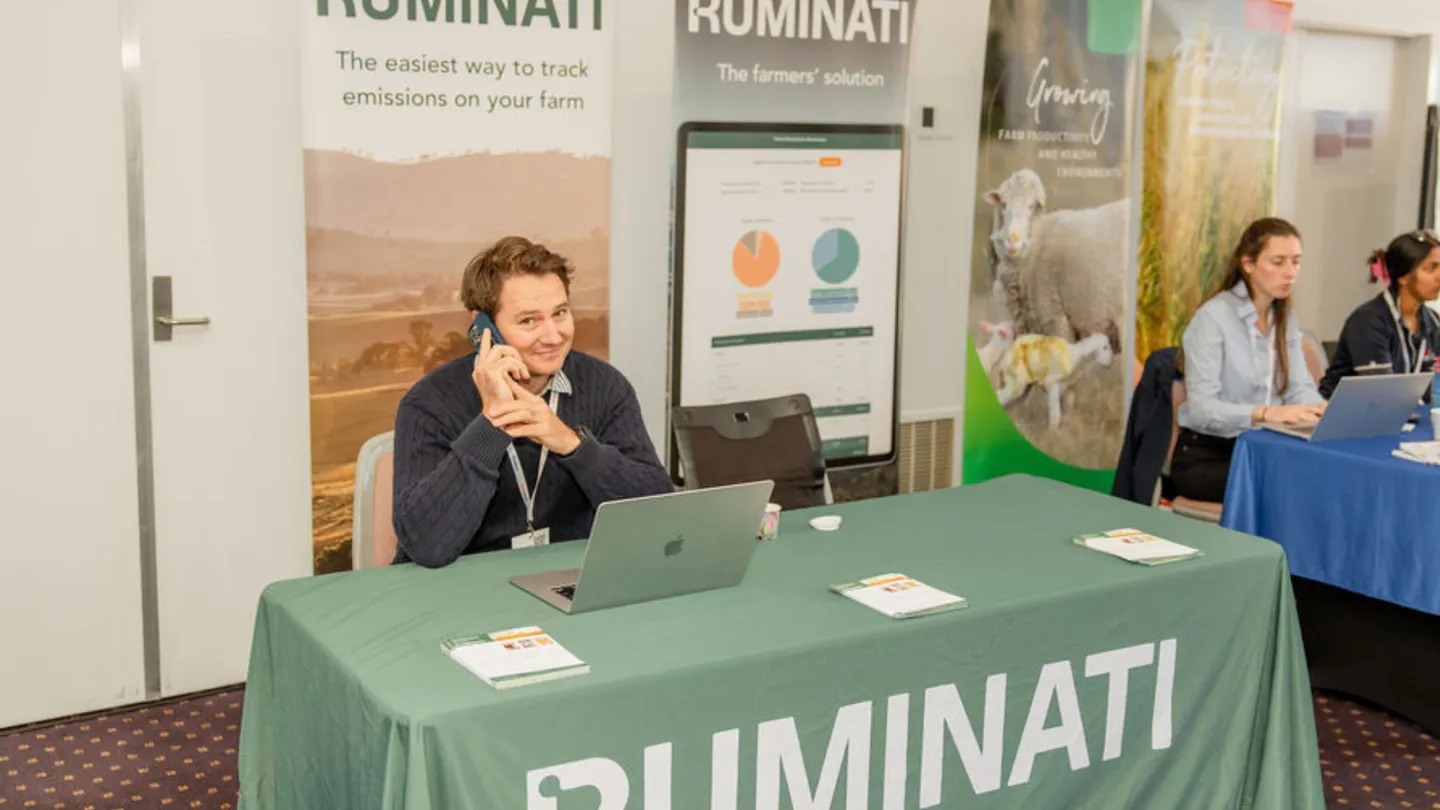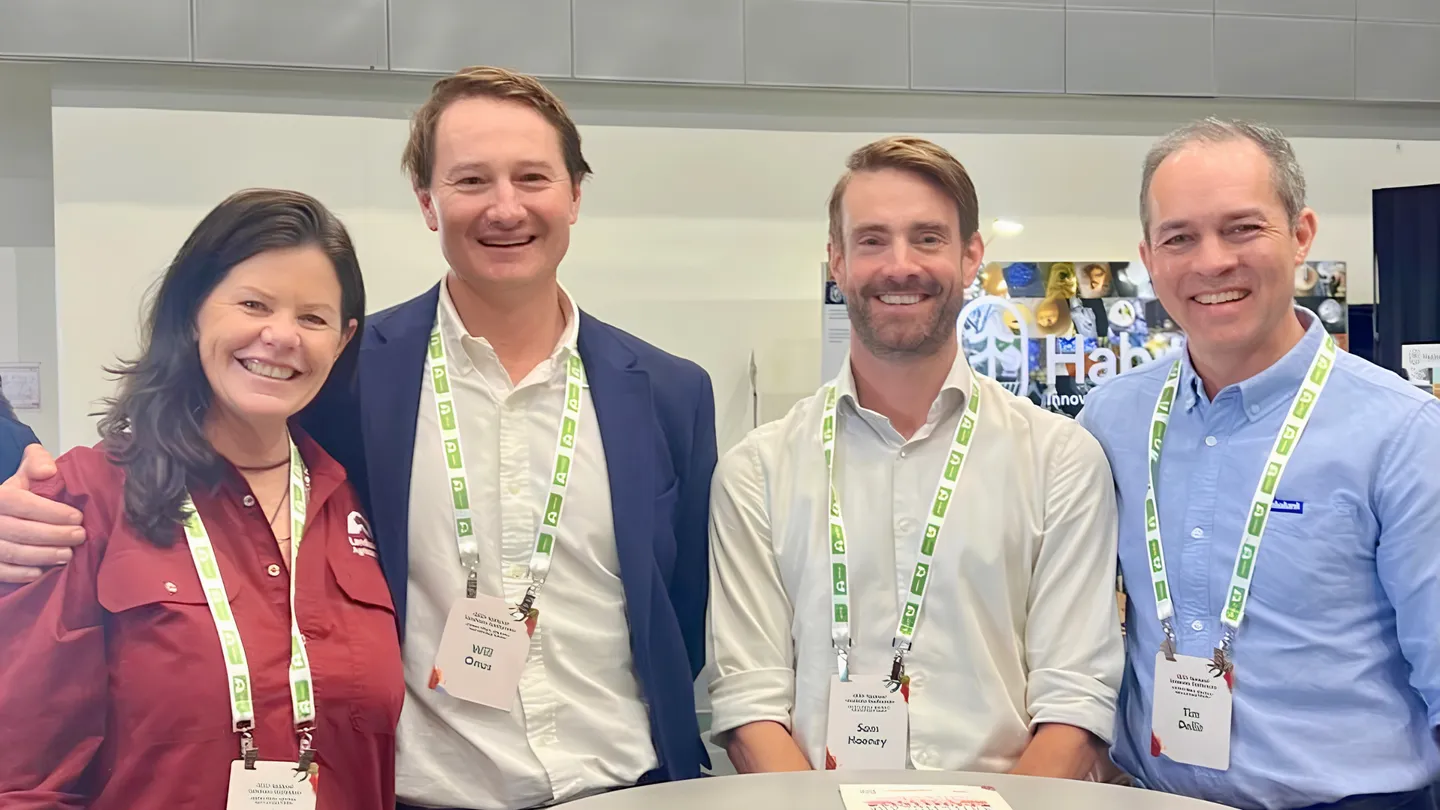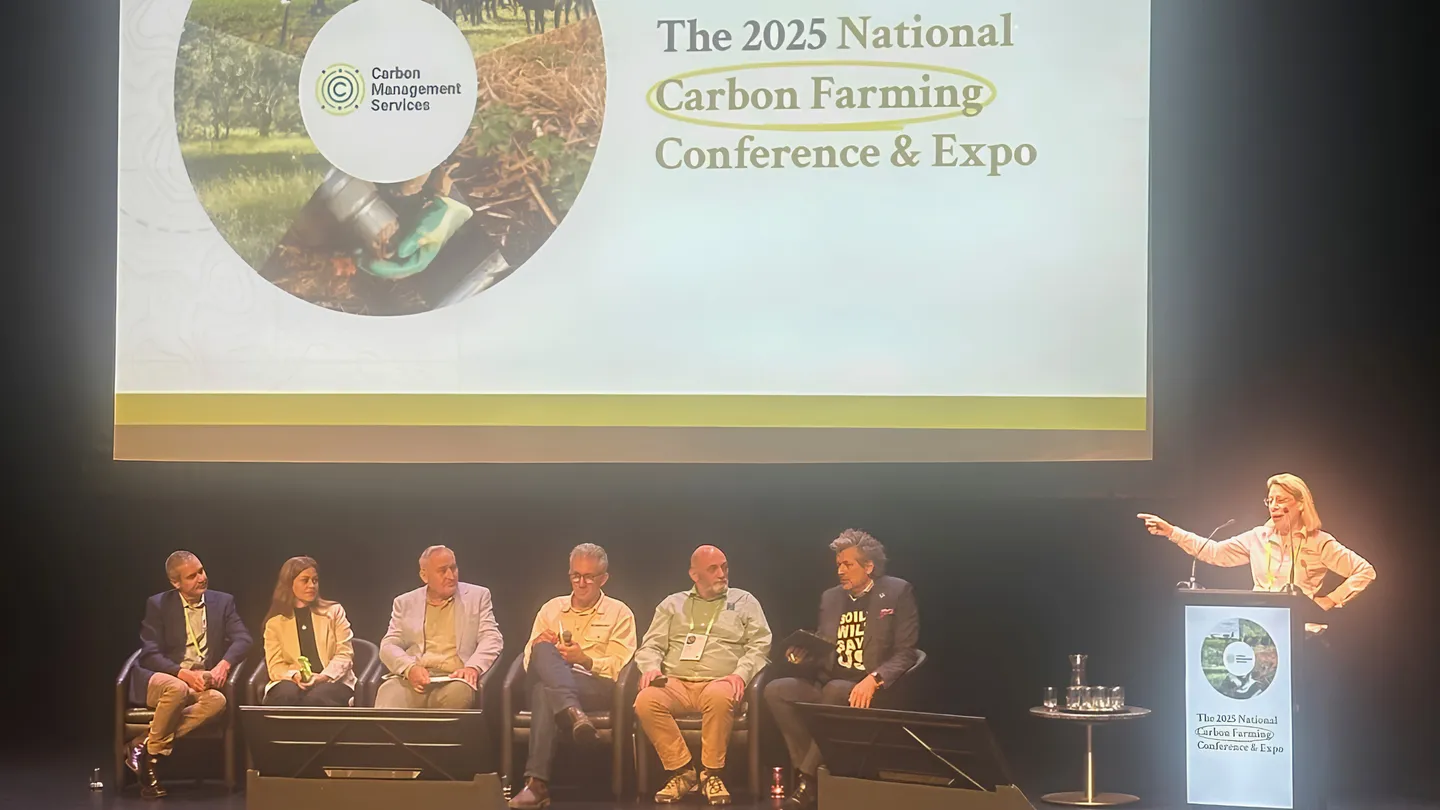
Anyone who has been to a conference on emissions and farming has heard plenty of big claims, and producers have good reason to be sceptical of anything that sounds as though a policy team wrote it in place of someone who has run a farm. That was the room Ruminati Customer Engagement Lead Bill Findlay spoke to at the National Carbon Farming Conference in Albury last month, in a farmer-to-farmer session on on-farm emissions tracking and the upcoming voluntary accounting standards, along with what emissions reporting regulations mean in practice.
The tone throughout was practical, with less time on the theory of emissions accounting and more on what producers need to know to stay ahead of what is coming. Bill’s framing for the session cut through a lot of the noise that clouds these conversations: “Once you start seeing where your emissions come from, you start finding ways to do things better. It’s not about emissions for emissions’ sake. It’s about making your business more profitable, efficient, resilient, and ready for what’s next.”
That framing landed well with sceptics because it starts from the farm. A farm’s emissions are largely a record of decisions the producer already makes, on stocking rates and fertiliser use among others, so laying them out shows where the business has room to move, and the same figures that answer a buyer or a bank are the ones that show it.
There is also a fair worry behind the scepticism, which is whether a figure produced today turns into an obligation tomorrow. The accounting standards Bill spoke about are voluntary, and the direction of travel towards more reporting is clear, so there is value in getting the farm’s figures down on the producer’s own terms before anyone asks. The upcoming standards and regulations will bring their own requirements, and a producer who already has those figures in hand can read each new requirement against them, which makes them the practical starting point however it lands.