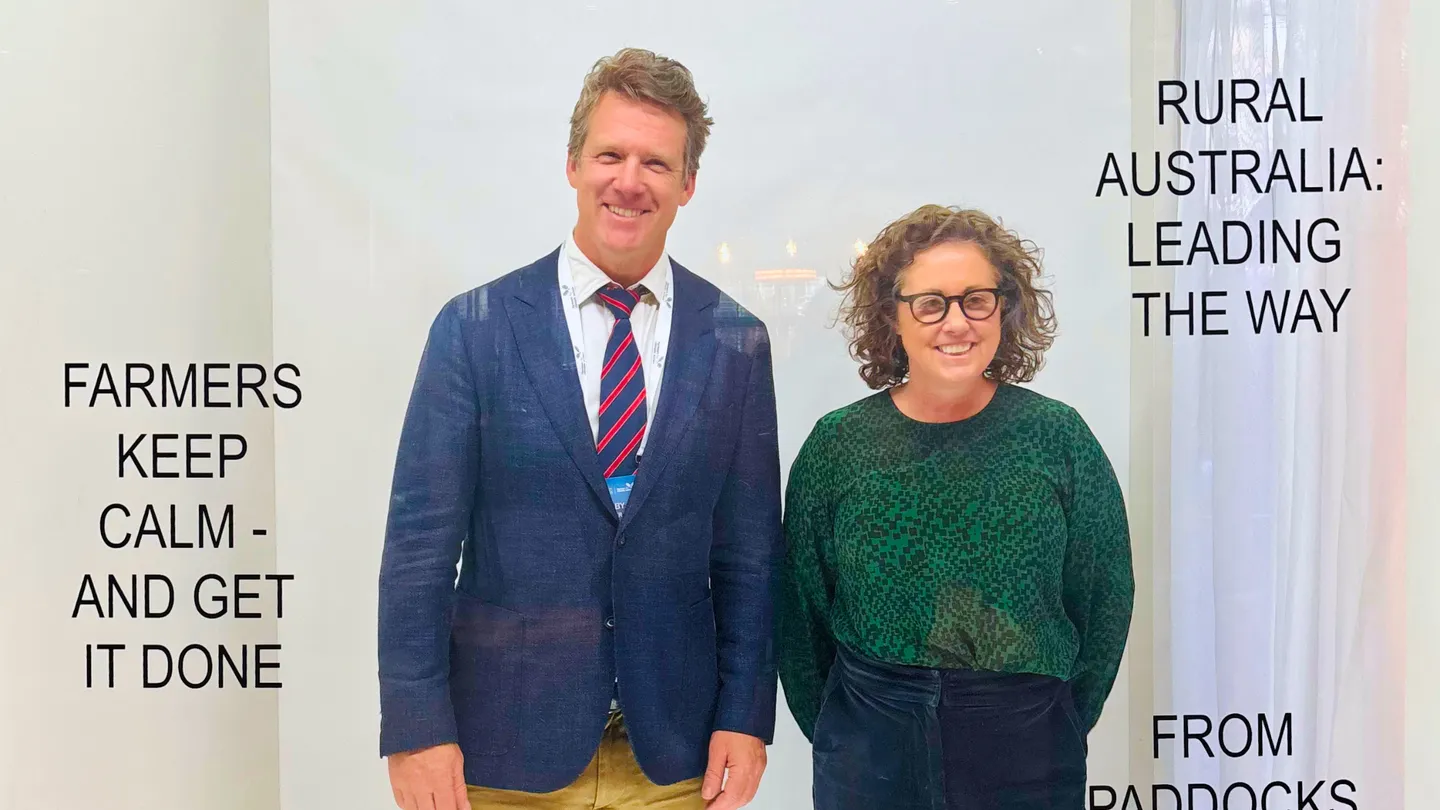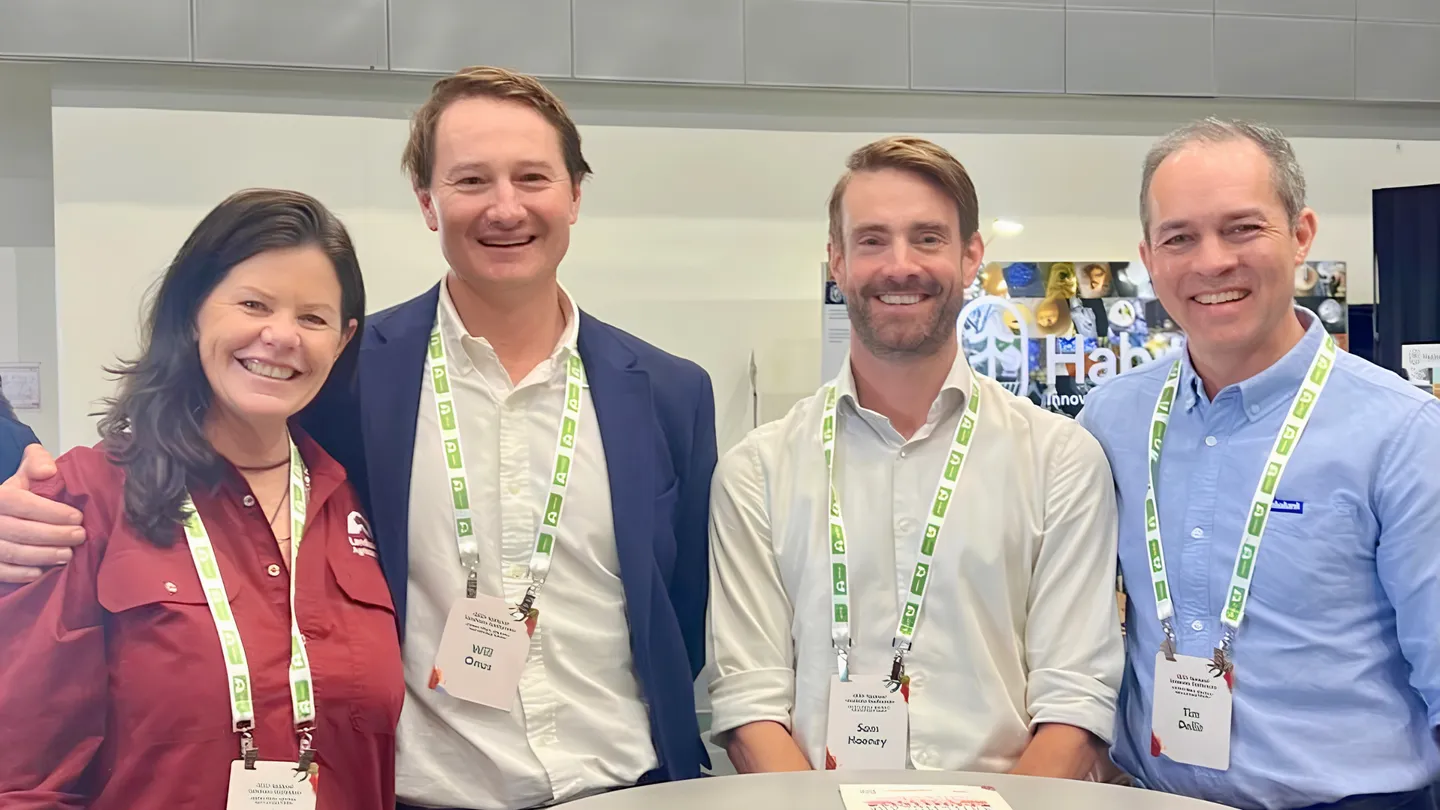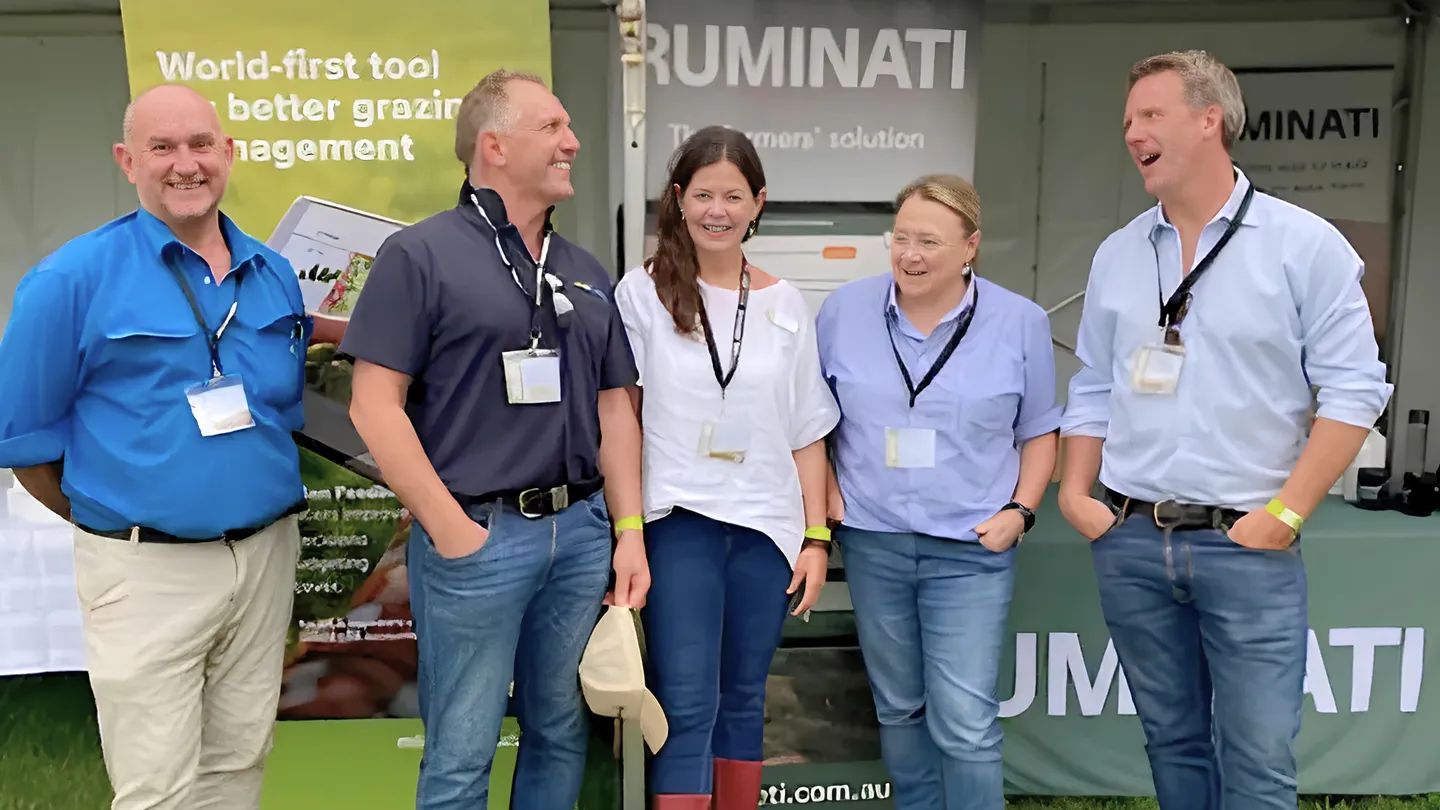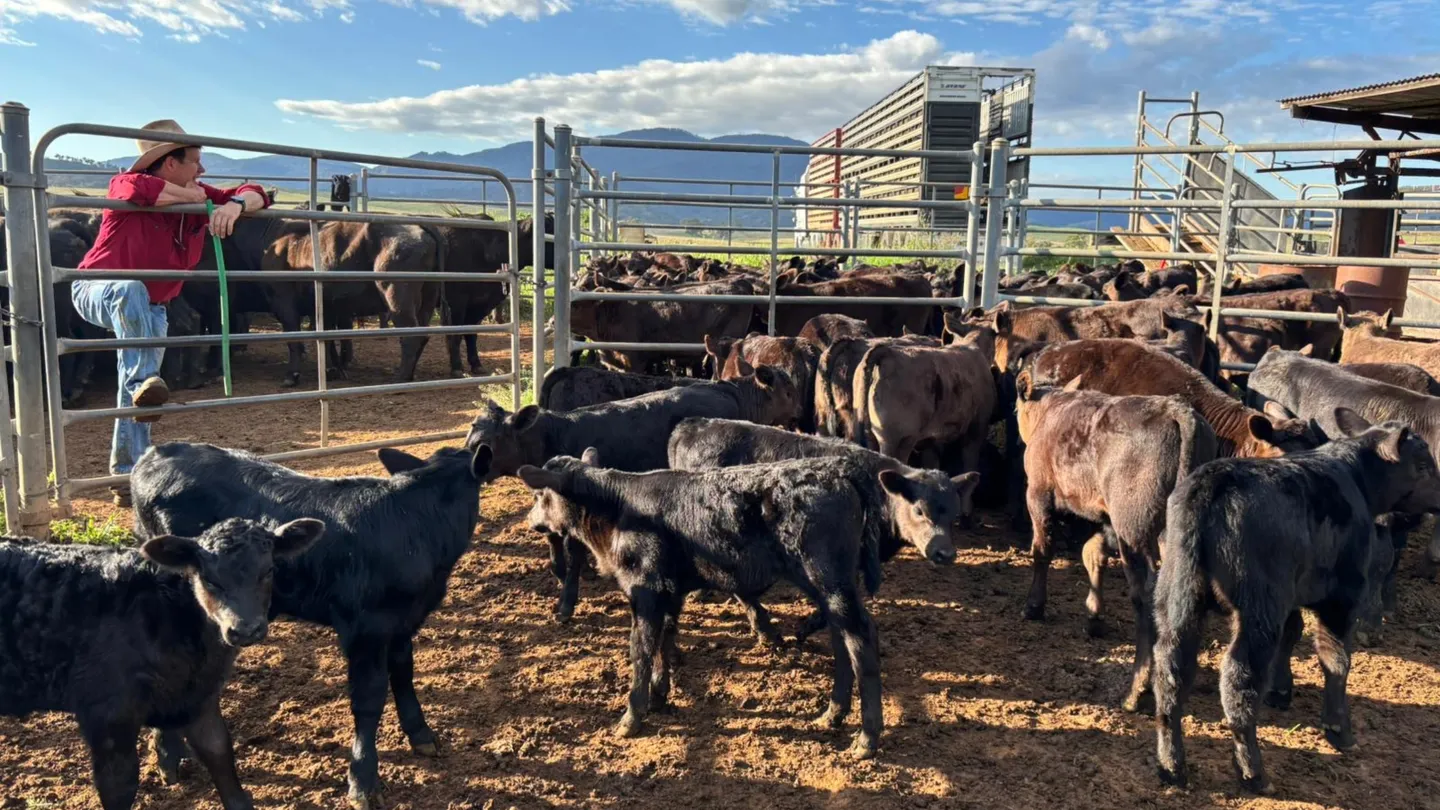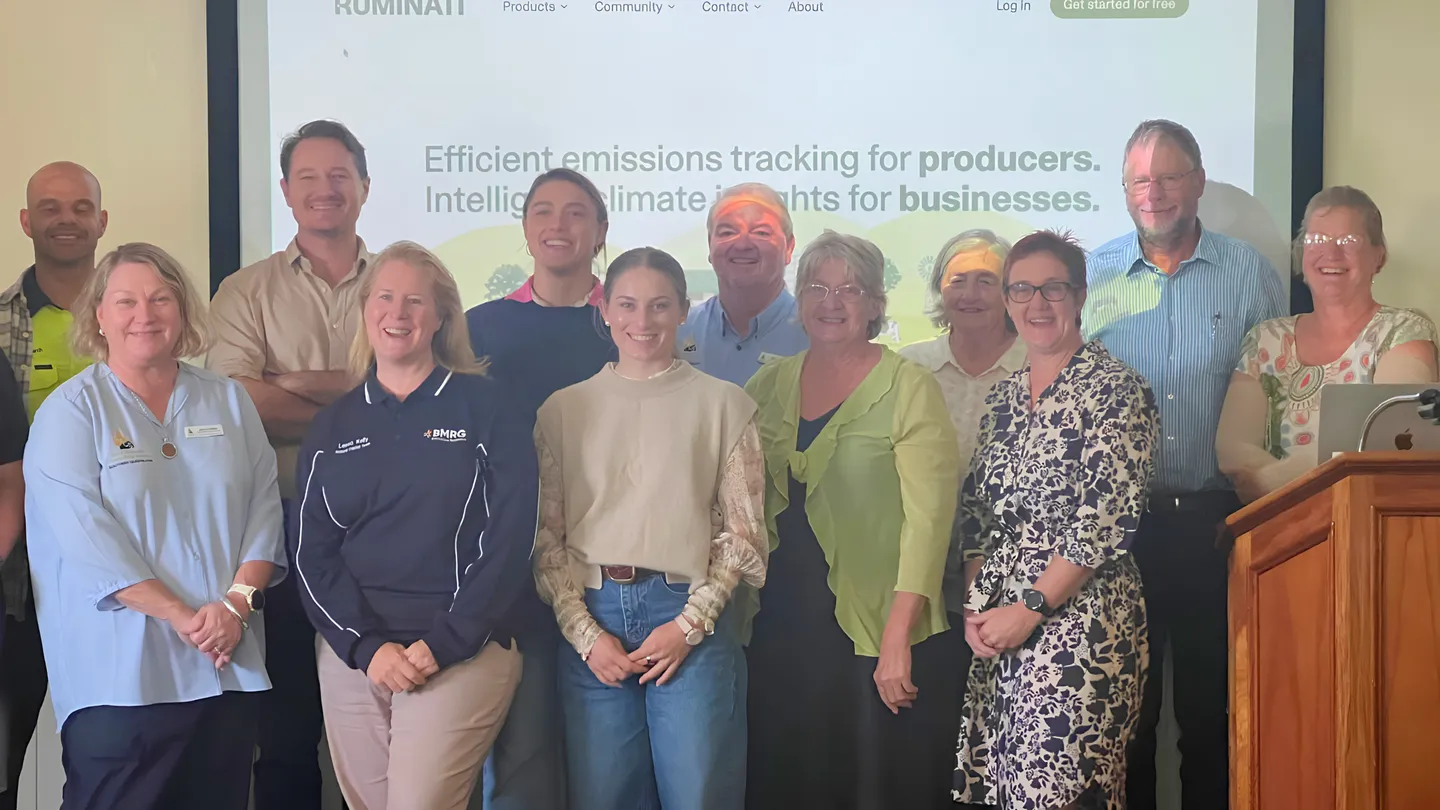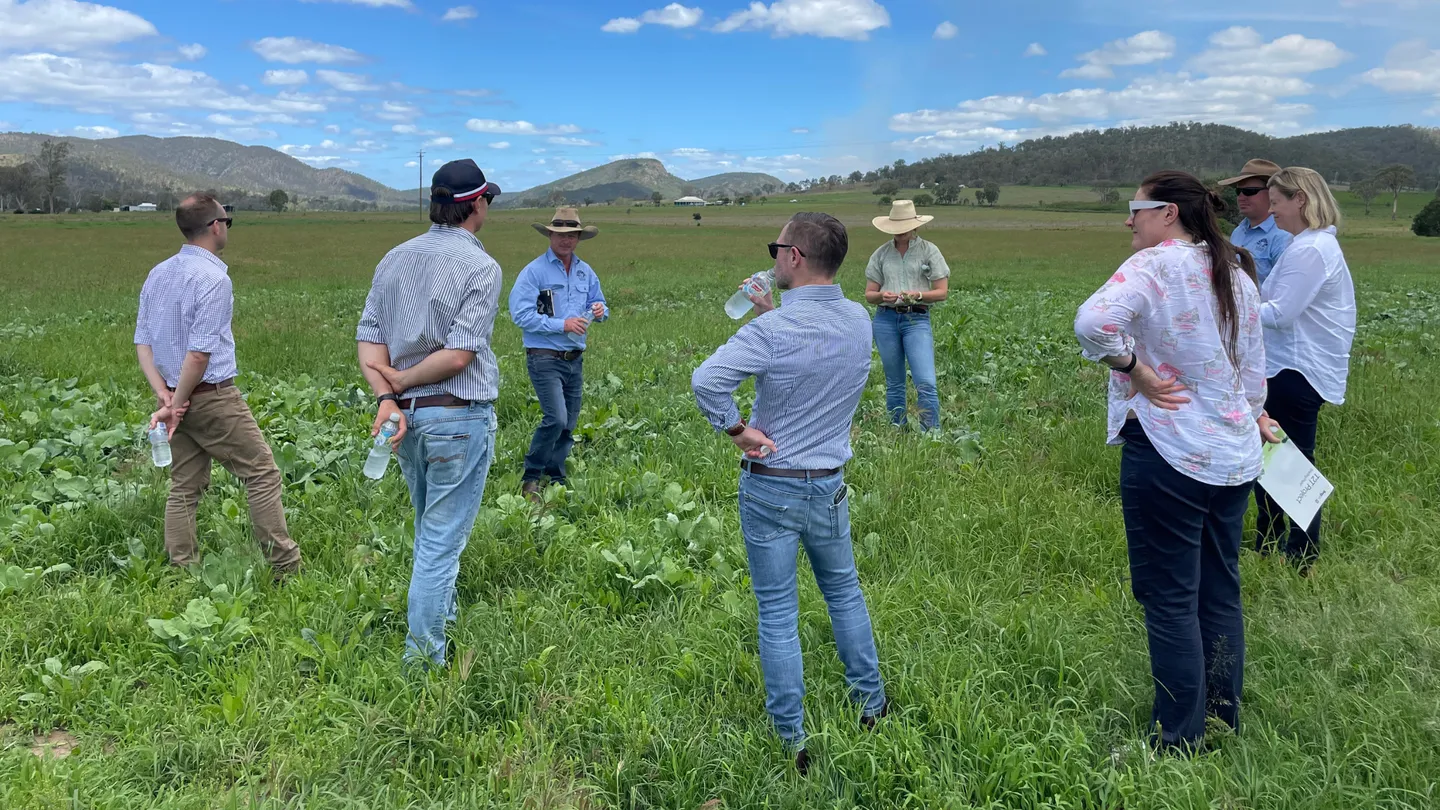
Ben Drynan’s property Gallinani, near Esk in Queensland’s Somerset region, makes a good case for how well production and emissions management can work together. It was the centrepiece of a visit to the T2T Esk Producer Hub that Ruminati co-founder Will Onus joined alongside Rebecca Honeysett from McDonald’s Australia, Connor FitzGerald from Fulton Market Group, and producers Caitlin McConnel and Amanda Roughan. The hub is part of the broader Tassie to Townsville Project, which supports beef producers to build emissions profiles that also improve production outcomes.
On the tour, Ben showed how he is sowing multi-species cover crops enriched with recycled organic fertiliser and managing three generations of native timber for production over the long term, all while pushing his overall productivity forward. Production and environmental outcomes are reinforcing each other on Gallinani in a way that is increasingly difficult to argue against, and seeing it on the ground makes the point far better than a slide could.
For Will, who runs cattle himself, a farm visit like this lands differently than a conference presentation. Standing among the cover crops and the timber, and hearing about the practical management decisions behind the figures, reinforces what Ruminati is trying to help producers capture and communicate. An emissions profile built from data like Ben’s tells a much fuller story than any single figure could, and that story carries value as scrutiny along the supply chain increases.
The visit to Esk is one stop on a longer run, with the team heading back to the region and stops in Rockhampton and Monto to follow. The T2T project is doing important work in bringing producers together with the processors and retailers they supply, so that questions about emissions get worked through by the people who produce the beef and the people who buy it. A property like Gallinani gives that conversation something concrete to point to.